
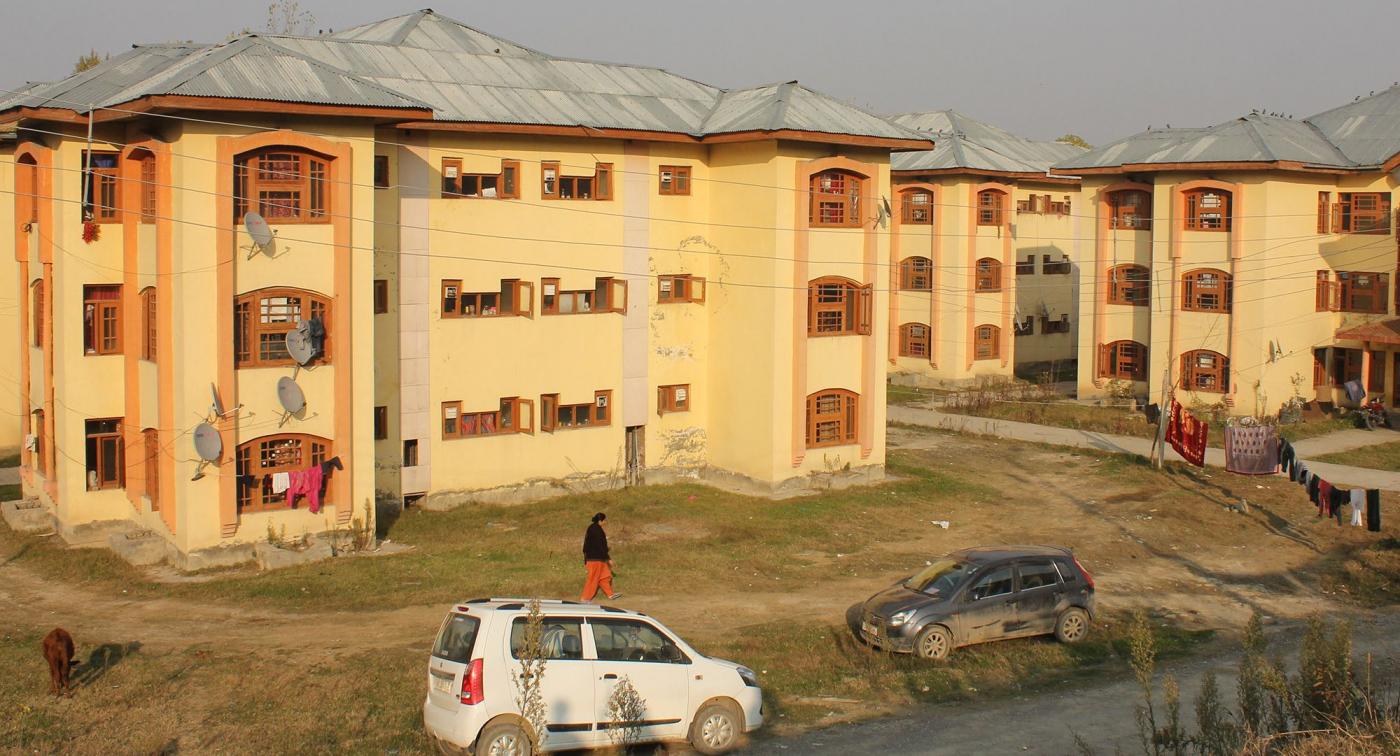
Thirty-six years. That’s how long the Kashmiri Pandit community has waited.
The internal displacement of Kashmiri Pandits remains one of South Asia’s most persistent humanitarian crises. By January 2026, this crisis exploded into massive strikes at the Jagti Tenement Township. The protests blocked the Jammu-Srinagar National Highway. A tragic incident at Kerly Chowk left one man severely injured. Police responded with lathi charges. The community’s strategy had fundamentally shifted from patient waiting to assertive territorial demands.
This wasn’t just about broken pipes or power cuts. This was accumulated frustration boiling over after thirty-six years of institutional neglect and the systematic erosion of ancestral rights.
In this article, we will discuss the Jagati protest 20226, injuring Ajay Chaman
The Structural and Historical Genesis of the Jagati Protest 2026
To understand the intensity of the strikes at Jagti in January 2026, one must analyse the layered history of the Kashmiri Pandit exodus and the subsequent failure of the state to provide a viable path for return. The exodus of 1989–1990 was characterised by a rapid breakdown of the security apparatus in the Kashmir Valley, where a burgeoning insurgency, increasingly influenced by Islamist factions, targeted the Hindu minority as symbols of Indian sovereignty.1 The community experienced a climate of absolute panic, fuelled by targeted killings of high-profile officials and the broadcast of threatening slogans from religious institutions.1
The community’s transition from the Valley to the plains of Jammu led to decades spent in transitional camps. The establishment of the Jagti Tenement Township in 2011 was initially heralded as a significant step toward a more dignified existence. However, the township’s physical and economic isolation—located approximately 12 kilometres from the urban centre of Jammu—created new challenges.3 Residents found themselves in a “hellhole,” or Jagti township, where the inability to access the local labour market for supplemental income coincided with a deteriorating infrastructure.3
Infrastructure Decay and Resource Management
The strikes in January 2026 were precipitated by chronic failures in the township’s basic services. The infrastructure, constructed at an estimated cost of approximately Rs. 500 crores, has shown signs of premature collapse.4 Residents have documented extensive cracks and persistent leakages in the residential blocks, suggesting significant lapses in construction quality and oversight.4
| Infrastructure Component | Financial Allocation (INR) | Primary Failure Mechanism |
| Residential Block Construction | 500Crores | Structural instability and widespread leakages.4 |
| Water Supply Scheme (River Tawi) | 14.10 Crores | A reservoir built in a flood bed, rendering it defunct during monsoon rains.4 |
| Repair and Maintenance (RTI Disclosed) | 17.19 Lakhs | Ineffective patching; failure to arrest ongoing structural decay.4 |
| Power Infrastructure | Unspecified | Frequent, unscheduled curtailments affect the health of the elderly and infants.4 |
The water supply scheme, in particular, has become a symbol of administrative failure. Despite an investment of Rs. 14.10 crores, supply is often regulated only twice a month, forcing residents to rely on tankers or erratic pipelines.3 The placement of the reservoir in the Tawi River bed has been cited by resident leaders as evidence of mass misappropriation of funds, as the system consistently fails during the rainy season.4
The January 2026 Agitation: Motivations and Mobilisation
The specific strikes that paralysed the Jammu-Srinagar National Highway in January 2026 were organised by “Youth 4 Panun Kashmir” (Youth 4 PK), representing a younger, more vocal generation of displaced Pandits.5 This mobilisation was timed to coincide with the 36th anniversary of the exodus, a milestone that the community leaders used to highlight the “stoic silence” maintained by successive governments regarding their permanent rehabilitation.5
The motivations for the strike were multifaceted. While local grievances regarding water and power were central to daily life, the overarching cause was the demand for a separate homeland within the Kashmir Valley with Union Territory status, as envisioned in the Marg Darshan resolution of 1991.5 The protesters argued that after three and a half decades, the policy of “transit accommodations” and “composite culture” had failed to provide the security necessary for a safe return.2
Specific Grievances and the “Why” of the Blockade
The blockade was a tactical escalation intended to force a direct engagement with the highest levels of the Indian government. The protesters specifically demanded a visit from the Union Home Minister, expressing a deep-seated distrust of the local Jammu and Kashmir administration.6 This distrust is rooted in the history of unfulfilled promises; for instance, community members recalled waiting for hours outside the Raj Bhawan for meetings that never materialised into concrete policy changes.7
The immediate triggers for the January 2026 strikes included:
- The Demand for a Genocide Bill: The community insists on the legislative recognition of their exodus as genocide, which they believe is the only way to ensure institutional safeguards against future repetition.2
- Ration Scale Reductions: The transition of food aid to the National Food Security Act (NFSA) scale significantly reduced the quantity of rations provided, a move that the community resisted as a violation of their status as security-related relief holders.8
- Safety of PM Package Employees: Following a surge in targeted killings, such as the assassination of Sunil Kumar Nath in August 2022, there is an urgent demand for the relocation of employees working in the Valley to safer zones in Jammu or the establishment of a separate homeland.9
The Kerly Chowk Incident: Anatomy of the Confrontation
The query regarding why a man was “pushed to get injured” refers to a specific, high-tension confrontation at Kerly Chowk during the January 18–19 blockade.5 As the protest intensified and the highway remained blocked for hours, senior police officials attempted to persuade the crowd to disperse, citing the disruption of emergency services.6 The refusal of the protesters to budge led to physical jostling between the security forces and the demonstrators.5
The Mechanism of Injury: Ajay Chaman
During this melee, a community member, Ajay Chaman, the son of Chaman Lal and a resident of Jagti, fell from a culvert at Kerly Chowk.5 The “why” behind this push is a point of significant contention between the community and the state.
- Protester Allegations: Eyewitnesses and community leaders from Youth 4 PK alleged that the police, in their attempt to clear the road and manage the crowd, used excessive physical force.5 They claim that the police “pushed the crowd aside,” and in the resulting chaos, Ajay Chaman was shoved over the edge of the culvert.10 This is framed as part of a broader pattern of callousness where the state prioritises traffic flow over the safety of patriotic, yet protesting, citizens.5
- Police and Administrative Defence: The administration maintained that the fall was an accident occurring during a legitimate attempt to restore order.6 Officials highlighted that the protesters remained “adamant” and refused to lift the blockade despite numerous attempts at pacification.5 The “push” is described in some contexts as the natural consequence of managing a large, emotionally charged mob in a confined space near a bridge or culvert.5
Aftermath and the “Failure of Help”
A particularly distressing aspect of the incident reported in media summaries was the delay in medical assistance. Reports suggest that Ajay Chaman lay on the road for nearly 20 minutes without help, while bystanders recorded videos on their mobile phones rather than intervening.11 Eventually, an individual identified as Singh pushed through the crowd, lifted the injured man, and transported him to the hospital in an auto-rickshaw.11 Ajay Chaman sustained “grievous injuries” and was admitted to the Government Medical College (GMC) in Jammu, with some later reports suggesting the fall was fatal.7
The Socio-Economic Impasse and the Narrative of Permanent Exile
The strikes at Jagti also highlight a growing divide between the displaced community and the political dynasties of the Kashmir Valley. Farooq Abdullah, former Chief Minister and president of the National Conference, expressed scepticism in January 2026 about whether the Pandits actually desired to return permanently to the Valley.12 He noted that many had built new lives, their children were educated and employed elsewhere, and their return might be limited to medical visits or tourism.12
This narrative is viewed by the residents of Jagti as a form of “victim-blaming” that ignores the lack of institutional safety. The community argues that the state’s failure to provide a “non-repetition” guarantee is what prevents their return, not a lack of desire.2 The “composite culture” restoration mentioned by some is dismissed as rhetoric as long as targeted killings of Hindus in the Valley continue unabated.2
Targeted Killings as a Deterrent
The strikes are deeply influenced by the security situation for those few Pandits who stayed behind or returned under the PM package. The pattern of violence in the 2020s has been particularly surgical and demoralising.
Kashmiri Pandits exodus is explored in further detail in my book, Shadows Over The Valley
| Incident | Victim(s) | Impact on Rehabilitation Sentiment |
| Chotigam Orchard Attack | Sunil Kumar Nath (Killed) | Targeted even after decades of peaceful residence; sibling critically injured.9 |
| Shopian Chemist Attack | Bal Krishan (Injured) | Targeted despite providing midnight medical aid to all communities.14 |
| Revenue Clerk Assassination | Rahul Bhat (Killed) | Demonstrated that even high-security government offices were not safe.9 |
| Schoolteacher Murder | Rajni Bala (Killed) | Sparked widespread protests and demands for the mass relocation of Hindu employees.9 |
These killings, often claimed by the Kashmir Freedom Fighters (KFF), are accompanied by rhetoric accusing the victims of being “agents of the BJP” or “immoral actors,” effectively dehumanising the minority community to justify terror.14 The persistence of these attacks reinforces the demand at Jagti for a “separate homeland”—a territory where the community can exercise self-governance and ensure its own defence.2
Institutional Inertia and the Role of the Relief Commissioner
The administration of the Jagti township and the broader migrant crisis are under the Relief and Rehabilitation Commissioner. Protests frequently erupt at this office due to perceived bureaucratic callousness. In late 2025 and early 2026, deputations highlighted a range of unresolved issues:
- Safety of Package Employees: The demand for relocation or exemption from duty in the Valley during periods of high militancy.15
- Bifurcation of Ration Cards: Delays in processing card splits that allow growing families to access their entitled relief.15
- Category Certificates: Difficulties in obtaining EWS and RBA certificates for the youth, which are essential for education and employment opportunities.15
The Relief Commissioner’s office has often been accused of being “insensitive” to the “agony and deprivations” of a community that has lived in exile for over three decades.15 The January strikes were, in part, a reaction to the failure of these smaller administrative channels, necessitating a larger-scale disruption to gain the attention of the Union government.6
Comparative Analysis of Police Force in Protest Settings
While the Kerly Chowk incident is unique to the Jagti context, it fits into a broader global and national discussion on the use of force against elderly or vulnerable protesters. The query’s focus on a man being “pushed to get injured” reflects a wider anxiety regarding police conduct. For instance, parallels can be drawn with the 2020 Buffalo incident, where a 75-year-old activist, Martin Gugino, was pushed by police, suffering a fractured skull.17 In both the Jagti and Buffalo cases, the official response initially downplayed the severity—Buffalo police initially claimed the man “tripped and fell,” just as the Jagti administration focused on the “adamant” nature of the protesters.5
The “casual cruelty” often observed in these high-stress crowd management situations—where officers walk past an injured man to continue a tactical advance—was reported in Buffalo and mirrored in the delayed response for Ajay Chaman at Kerly Chowk.11 This lack of immediate empathy from the state apparatus serves to radicalise the grievance, as the community perceives that their lives are viewed as expendable in the pursuit of administrative “order.”
Theoretical and Legal Frameworks of the Homeland Demand
The demand for a separate homeland at Jagti is grounded in the community’s interpretation of indigenous rights and the prevention of genocide. Leaders of Youth 4 PK and Panun Kashmir argue that as the “ancient civilisation” of the Valley, their uprooting constitutes a crime against humanity that can only be rectified through territorial sovereignty.5
The “Marg Darshan” Resolution vs. Current Policy
The 1991 resolution remains the “logical conclusion” for the protesters. This document rejects the idea of “peaceful co-existence” within the current administrative framework of the Valley. which they believe is dominated by a secessionist and communalist ethos.1 The current government’s focus on “dignified rehabilitation” through job packages and housing clusters is seen by the Jagti strikers as a “temporary patch” that ignores the fundamental need for political agency.5
| Policy Feature | Government Approach | Panun Kashmir / Jagti Demand |
| Geographic Scope | Scattered clusters in existing villages/towns. | Concentrated, separate territory with UT status. |
| Security Model | State police and paramilitary protection. | Community-led or direct Union control. |
| Socio-Cultural Aim | Integration and “Composite Culture.” | Preservation of specific Hindu heritage and genocide recognition. |
| Administrative Link | J&K UT Administration. | Direct Union Territory status, separate from Valley politics. |
The Future Outlook: Escalation or Resolution?
The events of January 2026 suggest that the displaced Kashmiri Pandit community has entered a period of “intensified agitation”.6 The warning from resident committees that “continued neglect could lead to intensified agitation” is not merely rhetorical but reflects a generational shift in the community’s patience.6 The youth, having grown up in the “hellhole” of Jagti, are less inclined than their parents to accept small concessions like ration card bifurcations or minor repairs.3
The injury or death of Ajay Chaman at Kerly Chowk has provided the movement with a martyr figure, a powerful catalyst for further mobilisation.7 The administration’s ability to resolve this crisis will depend on its willingness to move beyond the management of “migrant issues” toward an actual resolution of “genocide and homeland” demands.
The Role of the International and National Community
While the cause of the Pandits has been championed by various socio-religious organisations across India, the strikers at Jagti expressed disappointment that even with a sympathetic central government, their core issues remain unaddressed.2 The demand for the “Genocide Bill” is an attempt to internationalise their struggle and force the Indian state to provide the same level of protection and recognition afforded to other victims of ethnic cleansing globally.5
In conclusion, the strikes at Jagti in January 2026 were the result of a convergence of factors: a 36-year history of exile, the collapse of infrastructure in the township, the existential threat posed by targeted killings in the Valley, and a perceived lack of political will to grant the community territorial sovereignty. The incident at Kerly Chowk, involving the injury of Ajay Chaman, stands as a stark indictment of the current management of the displacement crisis. For the residents of Jagti, the “why” of their struggle is clear: it is a battle for survival, recognition, and the right to exist as a distinct cultural entity in their own homeland. Without a fundamental shift in the state’s approach—moving from “relief” to “restitution”—the township will probably remain a site of persistent and escalating unrest.
Works cited
- Exodus of Kashmiri Hindus – Wikipedia, accessed on January 20, 2026, https://en.wikipedia.org/wiki/Exodus_of_Kashmiri_Hindus
- Why Kashmiri Pandits’ hopes of being rehabilitated by the BJP seem to be on the wane, accessed on January 20, 2026, https://thefederal.com/category/the-eighth-column/kashmiri-pandits-exodus-return-rehabilitation-bjp-nda-pdp-nc-jammu-camps-kashmir-225967
- The Nowhere People – Open The Magazine, accessed on January 20, 2026, https://openthemagazine.com/features/india/the-nowhere-people
- Inmates of Jagti migrant camp observe July 16 as Black Day – Early Times, accessed on January 20, 2026, https://www.earlytimes.in/m/newsdet.aspx?q=154366
- Thousands of KPs hold protest, block NH at Jagti for hours – Daily …, accessed on January 20, 2026, https://www.dailyexcelsior.com/thousands-of-kps-hold-protest-block-nh-at-jagti-for-hours/
- Kashmiri Pandits Shut National Highway at Jagti, Press for …, accessed on January 20, 2026, https://earthnews.in/kashmiri-pandits-shut-national-highway-at-jagti-press-for-homeland-and-time-bound-return-policy/
- Man Dies After Falling From Bridge During Protest; Allegations Against Police Cause Yet to Verified – YouTube, accessed on January 20, 2026, https://m.youtube.com/watch?v=7fDFTsnrNBo
- Displaced Pandits protest at Jagti, other camps, reject ration as per NFSA – Daily Excelsior, accessed on January 20, 2026, https://www.dailyexcelsior.com/displaced-pandits-protest-jagti-camps-reject-ration-per-nfsa/
- Another targeted killing; Kashmiri Pandit shot dead by terrorists, brother critical | Srinagar News – Times of India, accessed on January 20, 2026, https://timesofindia.indiatimes.com/city/srinagar/another-targeted-killing-kashmiri-hindu-shot-dead-by-terrorists-another-critical/articleshow/93586407.cms
- https://www.dailyexcelsior.com/xmltest/, accessed on January 20, 2026, https://www.dailyexcelsior.com/xmltest/
- MDCCCXXXVIII | VOL.75 NO. 208 | NEW DELHI | FRIDAY, AUGUST 30, 2024 – THE TIMES OF INDIA – Chronicle Club, accessed on January 20, 2026, https://chronicleclub.in/storage/uploads/1724992121-times-of-india.pdf
- Don’t think Kashmiri Pandits want to live in the Valley permanently: Farooq Abdullah, accessed on January 20, 2026, https://www.thehindu.com/news/national/jammu-and-kashmir/dont-think-kashmiri-pandits-want-to-live-in-valley-permanently-farooq-abdullah/article70524889.ece
- Don’t think Kashmiri Pandits want to live in Valley permanently: Farooq Abdullah, accessed on January 20, 2026, https://m.economictimes.com/news/politics-and-nation/dont-think-kashmiri-pandits-want-to-live-in-valley-permanently-farooq-abdullah/articleshow/126673748.cms
- Muslims come to the aid of panic-struck Choutigam’s Kashmiri Pandit families after militant attack – The Hindu, accessed on January 20, 2026, https://www.thehindu.com/news/national/other-states/panic-grips-choutigams-kashmiri-pandit-families-after-militant-attack/article65293028.ece
- Kashmiri Pandit deputation calls on Relief Commissioner for migrant – Early Times, accessed on January 20, 2026, https://www.earlytimes.in/newsdet.aspx?q=327017
- The Tribune, Chandigarh, India – LUDHIANA, accessed on January 20, 2026, https://www.tribuneindia.com/2012/20120727/jmtrib.htm
- Buffalo police shoving incident – Wikipedia, accessed on January 20, 2026, https://en.wikipedia.org/wiki/Buffalo_police_shoving_incident
- Buffalo Cops Who Pushed Elderly Man to Ground During 2020 Protest Are Cleared, Will Be Reinstated – People.com, accessed on January 20, 2026, https://people.com/crime/buffalo-cops-pushed-elderly-man-cleared-arbitrator/
- Video shows elderly man hitting his head on the ground after being shoved by police in Buffalo – CBS News, accessed on January 20, 2026, https://www.cbsnews.com/news/buffalo-man-police-pushed-elderly-hit-head-protests-niagara-square/
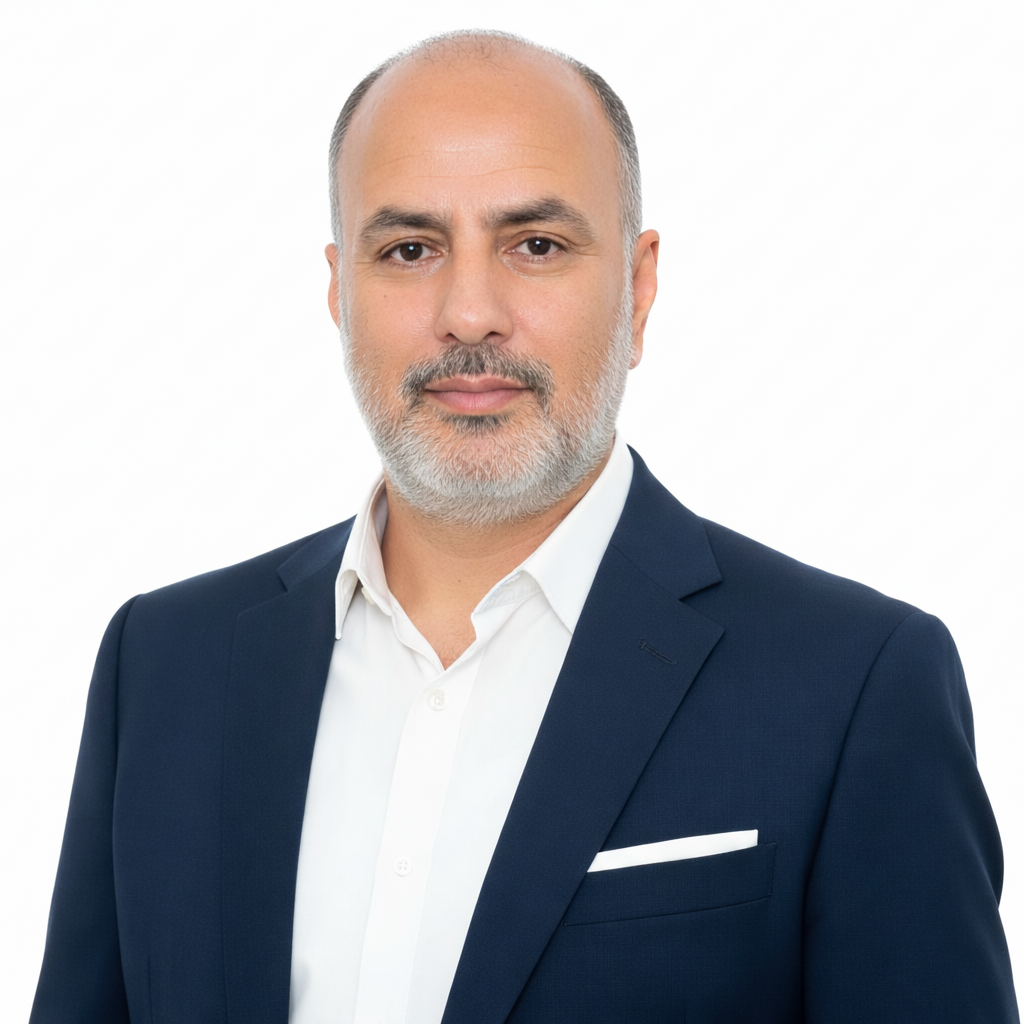
Rohit Tikoo is a published author, researcher, and content strategist with over two decades of writing experience. He is the author of nine books covering Kashmir, Indian philosophy, social issues, and contemporary thought, including Shadows Over the Valley: Operation TUPAC, Cold War Geopolitics, and the Kashmiri Pandits Exodus (2025).
His work focuses on Kashmir’s history, literature, culture, and the lived experiences of the Kashmiri Pandit community. Through extensive research, archival references, and historical analysis, he seeks to document and preserve narratives that are often overlooked in mainstream discourse. His writing on Kashmir has appeared in DAILY EXCELSIOR, HEADLINES TODAY, ONLY KASHMIR, GREATER KASHMIR, NAAD,
VITASTA, CHATTAN, AND VOICE OF SILENCE.
Through rohittikoo.com, he publishes research-based articles, essays, and commentary aimed at fostering informed discussion on Kashmir, Indian civilisation, literature, and contemporary society.