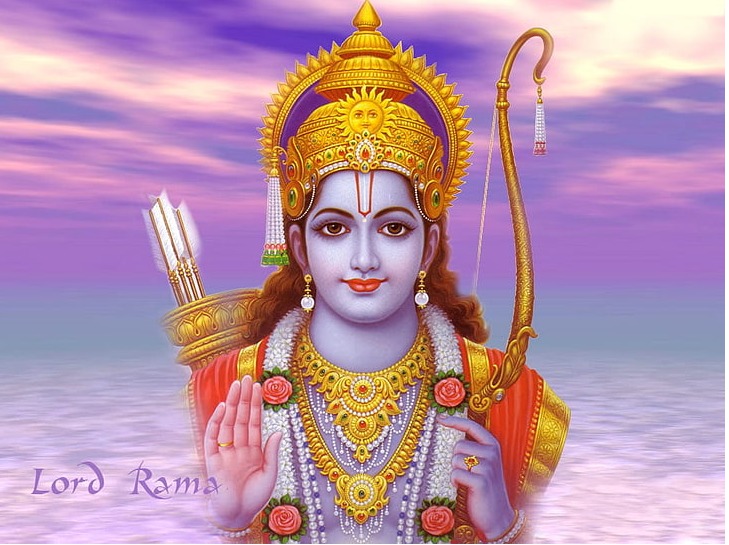
This post aims to respectfully share a meaningful interpretation of Bhagwan Ram’s name based on our scriptures. Understanding the significance of Bhagwan Ram is pretty simple from the perspective of his own life. The post does not cause offence to anyone, as it shouldn’t, as its purpose is to express a deep understanding of the significance of Bhagwan Ram’s name in alignment with our sacred texts.
Isolating God from the potency not only limits our understanding but also diminishes the profound beauty and wisdom that emerges from their divine interplay. Just the significance of Bhagwan Ram’s character is incomplete without Sita, the divine is intimately connected to its potency. By recognizing and embracing this union, we embark on a journey towards a more comprehensive and holistic spiritual understanding, enriching our lives with the boundless love, wisdom, and grace that emanate from this divine union.
The union of Bhawan Ram and Sita is symbolic of the inherent interplay between God and potency. It underscores the idea that the divine cannot be fully comprehended or experienced without recognizing the complementary aspect of its potency. Just as Ram’s character is elevated by Sita’s virtues, the divine is enriched and enlivened by the potency that emanates from it.
In Hindu tradition, Uttering God without the potency of God is meaningless. We use Radha before Krishna as Radha Krishna, similarly, we use Sita’s name as Sita Ram and Lakshmi Narayan.
In Hindu tradition, speaking the name of God without acknowledging the inherent power and potency of God holds no significance. We observe this by placing Radha before Krishna as “Radha Krishna” and using Sita’s name alongside Ram as “Sita Ram” and Lakshmi’s name with Narayan as “Lakshmi Narayan.” This highlights the inseparable connection and interplay between the divine and its potency.
When we separate the potency from God or try to create the potency independently, we lose the deepest spiritual essence and meaning of the words. Forcefully uttering “Jai Shri Ram” with anger without referring to Maa Janaki (Sita) transforms the sacred words into a political expression filled with negative emotions. However, Bhagwan Ram, who exemplified the virtue of Maryada (righteousness), was far from being an angry God.