
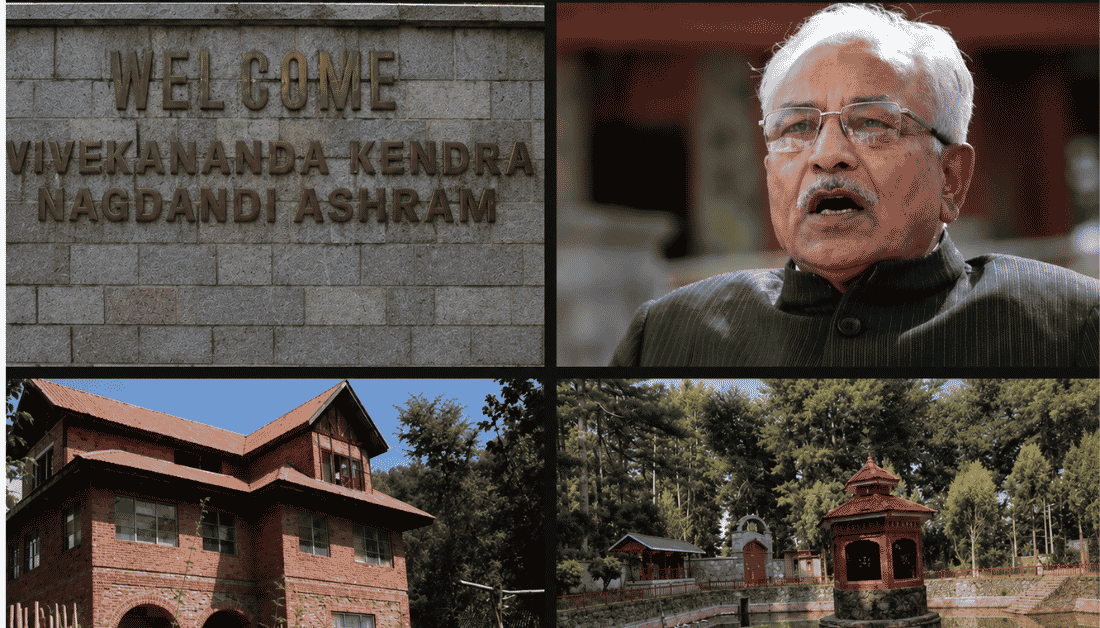
On 23 June 2026, President Droupadi Murmu conferred the Padma Shri on Brij Lal Bhat. For a moment, the marble halls of Rashtrapati Bhavan turned toward a story that official India has too often looked away from.
Kashmir is widely known for headlines about political tension and conflict. Today, however, the region is celebrated for the quiet, transformative work of this extraordinary social worker. His award highlights a life dedicated to healing community divides and turning barren land into blooming orchards.
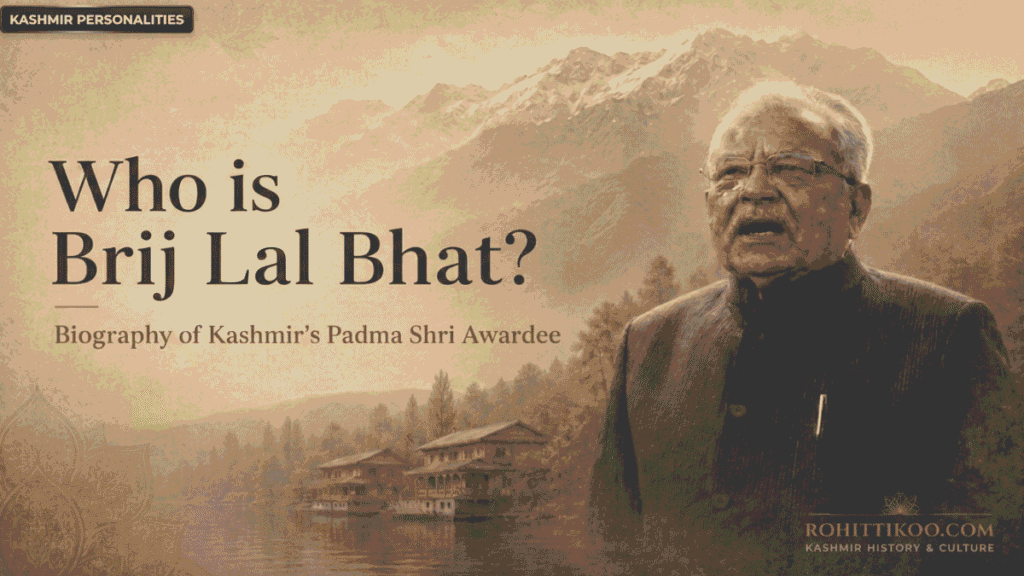
Who is Brij Lal Bhat?
Brij Lal Bhat is a distinguished former bureaucrat, agricultural pioneer, and social worker from Jammu and Kashmir who was awarded the Padma Shri in 2026 for his wide-ranging community service.
Born on 16 March 1945 in south Kashmir’s Anantnag district, he spent his early years mastering the science of the land. His recognition brings immense pride to the Kashmiri Pandit community, mirroring their enduring resilience, cultural survival, and unbreakable bond with the soil of the Valley.
What was His Academic and Professional Role in America?
To expand his expertise in agricultural systems, Brij Lal Bhat completed his higher education in the United States. He specialised in marketing and refrigeration at Washington State University after earning a first-class-first postgraduate degree in Horticulture in India.
His time in America equipped him with advanced technical knowledge of cold-chain infrastructure and post-harvest management. He later used these skills to completely overhaul the fruit industry back home.
How did Brij Lal Bhat Transform the Agricultural Sector in India?
During Brij Lal Bhat’s active career as a high-ranking bureaucrat, he systematically modernised the agricultural economy of Jammu and Kashmir. Serving as the Director of Horticulture Planning and Marketing and Chief Executive Officer of World Bank-aided projects, he played a pivotal role in securing official Agri-Export Zone status for the region’s apples and walnuts.
To modernise the local supply chain, he introduced cardboard packaging to replace traditional wooden crates and established major satellite fruit markets. He also conducted the first comprehensive horticultural survey of the remote Ladakh region to introduce scientific nut cultivation.
What did Brij Lal Bhat Do After Retirement?
After retiring from government service, Bhat shifted his focus entirely to community healing, youth integration, and regional peacebuilding in his birthplace. This decision carried profound weight given that Anantnag was the central flashpoint for the tragic 1986 Anantnag communal riots in Kashmir, a dark chapter of organised violence that fractured centuries of pluralism and preceded the mass exodus of 1990. Rather than abandoning his roots after witnessing these historical scars, Bhat chose to stay behind.
“When I was a government servant in the Valley, I could not do anything. After retirement, when I was freed from that bondage, I thought I should stay back in Kashmir, so that I could try to correct the mistakes that had happened.” — Brij Lal Bhat
Managing the Administrative Committee at the Shri Ramkrishna Mahasammelan Ashram (Vivekananda Kendra) in Nagdandi, Anantnag, he channelled his administrative skills into civil society initiatives. To promote inclusivity, he focused on running Bhandara Seva (community kitchens), organising Yoga Shiksha Shivirs, and establishing rural youth centres. He also used his horticultural background to reclaim barren lands, converting them into productive community orchards that provide local employment.
What is His Vision for the Return of Kashmiri Pandits?
Brij Lal Bhat actively advocates for a structured, inclusive policy framework that facilitates the safe and voluntary return of displaced Kashmiri Pandits to their ancestral homes. He remains a realistic optimist, noting that clear signs of positivity are finally emerging. Across the Valley, local communities now openly acknowledge that decades of violence brought zero benefits to anyone.
However, he strongly emphasises that any successful rehabilitation policy cannot be implemented top-down. To ensure genuine, long-term acceptance, there must be transparent, mutual consultation with both the displaced Pandit community and the majority community currently residing in the Valley.
The Three Pillars of Brij Lal Bhat’s Life Work
To understand how idealism translates into practical survival on the ground, his post-retirement career can be analysed through three core operational fields:
-
Strategic Advocacy for Displaced Families
Following the militancy that forced the exodus of the minority population, Bhat emerged as a steady voice calling for rehabilitation and dignity. Advocating for a displaced people is an incredibly difficult position to hold across generations. It demands absolute moral consistency, particularly when political winds shift and a community’s trauma is either weaponised or ignored by turns. Bhat stayed on that path regardless, refusing to let ancestral heritage fade into forced historical amnesia.
To achieve true justice, his advocacy moves beyond mere political rhetoric and focuses on ground-level restoration. He consistently emphasises that physical return is only half the battle; the true challenge lies in rebuilding the lost trust between fractured neighbours. By continuously engaging with both policy makers and grassroots leaders, he works to ensure that the preservation of identity is paired with secure, sustainable livelihoods for returning families.
-
Cultural Preservation and Youth Cohesion
Through cultural programs, spiritual education, and public engagement at the grassroots level, Bhat has helped younger generations remain anchored to their roots. This structural link to heritage ensures that the unique customs, language, and history of the community are actively preserved rather than fading into memory.
Simultaneously, his initiatives break regional silos by bringing youth from entirely different backgrounds together under one roof. By organising shared cultural platforms and interactive spaces, he works toward slowly repairing the communal tissue torn apart by decades of antagonism. This grassroots approach encourages mutual understanding, showing the younger generation that a peaceful, shared future is entirely possible.
-
Rural Economic Empowerment
Operating through the Vivekananda Ashram in Nagdandi, Bhat has directly assisted local farmers in adopting modernised horticultural practices for apple and walnut cultivation. This structural support helps rural families improve crop yields, transition away from outdated methods, and navigate complex regional market systems.
This unique synthesis of a retired civil servant’s logistical brilliance and a community organiser’s devotion has fundamentally altered livelihoods across South Kashmir. By transforming barren, neglected lands into high-yielding, productive orchards, he has created tangible economic security at the grassroots level. Ultimately, his work proves that long-term regional stability relies just as heavily on economic empowerment as it does on social reconciliation.
Key Takeaways
- The Recognition: Brij Lal Bhat received the Padma Shri on 23 June 2026 at the Second Civil Investiture Ceremony at Rashtrapati Bhavan, conferred directly by President Droupadi Murmu.
- The Category: Recognized in the field of Social Work representing Jammu and Kashmir, he was celebrated among the select recipients chosen under the “Unsung Heroes” initiative.
- Domain Synthesis: His past career as Director of the Horticulture Department gave his grassroots work a distinct, practical edge, transforming barren land into sustainable economic models.
- Core Philosophy: His lifework centres entirely on reconciliation and active coexistence rather than hostility, offering a rare model of sustainable peacebuilding in a conflict zone.
To explore more about his background and community work, you can view this broadcast detailing the life of Padma Shri Awardee Brij Lal Bhat. This profile provides on-the-ground footage of his dual legacy as an agricultural pioneer and a grassroots social worker in Nagdandi, Kashmir.

Rohit Tikoo is a published author, researcher, and content strategist with over two decades of writing experience. He is the author of nine books covering Kashmir, Indian philosophy, social issues, and contemporary thought, including Shadows Over the Valley: Operation TUPAC, Cold War Geopolitics, and the Kashmiri Pandits Exodus (2025).
His work focuses on Kashmir’s history, literature, culture, and the lived experiences of the Kashmiri Pandit community. Through extensive research, archival references, and historical analysis, he seeks to document and preserve narratives that are often overlooked in mainstream discourse. His writing on Kashmir has appeared in DAILY EXCELSIOR, HEADLINES TODAY, ONLY KASHMIR, GREATER KASHMIR, NAAD,
VITASTA, CHATTAN, AND VOICE OF SILENCE.
Through rohittikoo.com, he publishes research-based articles, essays, and commentary aimed at fostering informed discussion on Kashmir, Indian civilisation, literature, and contemporary society.