

The concept of ‘home’ for the Kashmiri Pandit community has undergone a radical, involuntary transformation. Since the exodus of 1990, the physical markers of our civilisation (Our heritage temples, the intricate woodwork of our ancestral houses, and the holy touch of Vitasta have been relegated to the realm of memory.
Yet, as we cling to these memories, a new and more insidious threat is emerging from the very corridors of power that once promised us restoration. While we wait for the physical gates of our homeland to reopen, the administrative gates are being slammed shut.
The transition is no longer about a journey back to the Valley, but about a forced absorption into the faceless ranks of a national database. By merging our unique identity markers under the National Food Security Act (NFSA), the state is attempting to complete through bureaucracy what was started through violence: the final dissolution of our status as a distinct, displaced people.
The Bureaucratic Erasure: Why the NFSA Merger is the Final Blow to Our Survival
For decades, we have been told that our return is a priority. We have seen our tragedy written into manifestos and spoken from podiums, yet today, we stand on the precipice of a final, bureaucratic erasure. The transition of our ration cards into the National Food Security Act (NFSA) database is not a “reform”—it is the systematic dismantling of our identity as Internally Displaced Persons (IDPs) and genocide survivors.
- The Manifesto Mirage: 2014, 2019, and the Silence of 2024
We remember the promises. In the 2014 BJP Election Manifesto, the commitment was clear: the “full resettlement” of Kashmiri Pandits in their ancestral land. By 2019, the promise was repeated, reinforcing the hope that our exile was temporary.
However, by 2024, the tone shifted. The explicit language of resettlement began to fade, replaced by a new, more clinical agenda. Instead of building the path home, the seeds were sown for our permanent “integration” into the locations of our displacement. By 2026, this plan has accelerated. The government is no longer talking about our return; they are talking about our assimilation into a generic database, effectively treating our exodus as a closed chapter of history.
- IDP vs. “Migrant”: A Deliberate Confusion
The government’s refusal to officially recognise us as Internally Displaced Persons (IDPs) is not a mere linguistic choice; it is a legal shield used to avoid international obligations.
- The False Equivalence: By merging our records under the NFSA, the state treats us no differently from migrant workers or the general BPL (Below Poverty Line) population.
- The Difference: A migrant worker moves for economic opportunity; an IDP flees for their life to escape genocide.
- The Erasure: When our “Migrant Ration Cards”—the only documents linking us to our original districts in the Valley—are subsumed into the NFSA, the legal proof of our displacement vanishes. We cease to be survivors of a specific atrocity and become mere “beneficiaries” of a food scheme.
- The Halt of Relief Hike: Financial Suffocation
The most damning proof of this shift in intent lies in the stagnation of our support systems, particularly the Monthly Relief Assistance. While baseline relief continues, the necessary increase in assistance has been frozen since 2018.By refusing to adjust for the rising cost of survival, the state is effectively devaluing our existence. This financial stagnation acts as a quiet pressure tactic. It leaves the most vulnerable among us in a state of permanent financial limbo, while the state treats our survival as a fixed, unchanging line on a ledger.
- This suffocation is a tactic to force “voluntary” integration.
- By making the “Migrant” status administratively difficult to maintain, the state nudges us toward the “General” category, where our history and our claims to our homeland are effectively nullified.
- Not a Votebank, but a Human Plank
We have been used as a political plank for too long. Our pain is harvested for votes, our history is cited in debates to garner support, yet when the cameras turn off, the administrative machinery works to dissolve our distinct status.
- Fake Concerns: The “concern” shown for us is often adulterated. It is used to justify broader political moves, while the actual needs of the displaced community—restitution, justice, and status preservation—are ignored.
- The Reality of 2026: As of May 2026, thousands of our ration cards have already been integrated. This is the “speedup” of our erasure.
Our Demand: Recognition, Resettlement and Not Integration
We are not merely “consumers” of the state’s grain; we are the survivors of a genocide whose primary right is the Right of Return.
- We demand the immediate halt of the NFSA integration for Kashmiri Displaced Persons.
- We demand the restoration and indexing of Monthly Relief Assistance.
- We demand the official recognition of our IDP status to protect our identity from being swallowed by a generic bureaucracy.
The government may want a clean spreadsheet, but we refuse to be the ink they wipe away. We are victims of history, not a votebank, and we will not allow our identity to be “integrated” into oblivion.
What Was Done to Us: The Undeniable Record
Before the government tells us we are being given something, let us say what was taken from us.
In January 1990, we were driven from our homes in the Kashmir Valley. Not gradually. Not with warnings. Overnight, in the bitter cold of winter, under threat of death. Armed militants targeted us by name, by profession, by faith.
On the night of January 19, 1990, loudspeakers from mosques throughout Kashmir broadcast threats into the darkness: “Raliv, Tchalive, ya Galiv” (convert , leave or die
Women were told they could remain, but only without their men. This was not a call for independence; it was a demand for our elimination.
Prominent members of our community were shot dead in broad daylight. In September 1989, Tika Lal Taploo, a leading advocate and our community leader, was gunned down in front of his house. In November 1989, Justice Neelkanth Ganjoo was shot in a busy marketplace.
Hundreds of others were killed. Women were gangraped.
We fled to protect our dignity.
The government gave us camps: Jagti, Purkhoo, Nagrota, Muthi, Batal Ballian, and Jhiri.
They told us these would be temporary. Thirty-six years later, we are still there. Some of us died in those camps, never having seen our homes again. Some of our children were born in those camps and have never known Kashmir except through our stories.
We Are Not Asking for Rations. We Are Asking to Be Resettled.
This is the heart of the matter, the point that must be understood clearly: We are not protesting because we want better rations. We are protesting because the government is offering us rations instead of what we actually need—our homes, our security, our dignity, and our return.
The militants drove us out with guns and grenades. The government’s failure to protect us allowed it to happen. For 36 years, instead of enabling our return to Kashmir with proper security, proper housing, and proper rehabilitation, successive governments have offered us temporary measures, welfare schemes, and now, ration card upgrades.
We are not economic refugees who migrated for better opportunities. We are internally displaced persons who were forced to flee under threat of death. We are survivors of targeted violence that India’s own National Human Rights Commission called ‘akin to genocide.’ The remedy for genocide is not a welfare scheme. The remedy for forced displacement is not better rations. The remedy is justice, accountability, and restoration.
May 6, 2026: Our protest against NFSA integration.
We must put on record what happened to us on May 6, 2026.
Hundreds of us came from Jagti, Purkhoo, Nagrota, and Muthi, from the camps where we have lived for decades. We came representing the United Alliance of Kashmiri Displaced Community, Panun Kashmir, and migrant camp welfare associations. We walked toward the Relief Commissioner’s office, the official designated by the state to address our displacement.
The designated Nodal Officer, Dr Arvind Karwani, who is currently serving as the Relief and Rehabilitation Commissioner for Internally Displaced Persons in Jammu & Kashmir, is not heeding our grievances. Instead, he appears more occupied with giving interviews to the media and government channels regarding the benefits being provided under the NFSA.
For God’s sake, he must understand the difference between migrant labourers and internally displaced survivors of genocide.
What We Demand: Not Better Rations. Justice.
Our demands, stated outside the Relief Commissioner’s office on May 6, 2026, are not complicated. They do not require extraordinary resources. They require only that the state acknowledge what it owes us and stop replacing that acknowledgement with administrative gestures.
- We demand the immediate rollback of the NFSA integration. We demand the continuation of the special migrant relief system—the system that carries, in its very existence, the acknowledgement that we are not ordinary citizens who fell on hard times, but internally displaced people with an outstanding, unaddressed, unremedied claim against the state.
- We demand formal recognition in the forthcoming national census as internally displaced persons and victims of genocide. Not ‘migrants.’ Not ‘welfare beneficiaries.’ Not ‘general displaced persons.’ Internally displaced genocide survivors—the precise phrase that the National Human Rights Commission used in 1995. Words on a census form are not administrative trivia. They are the legal architecture of our future.
- We demand that the government return its focus to where it should have been for 36 years: genuine, permanent, dignified rehabilitation of Kashmiri Pandits in Kashmir. With safety. With security. With the full weight of state protection that was absent the night we fled. Not transit accommodations that leave our people exposed to targeted killing. Not PM Package schemes accompanied by salary cuts when we raise our voices. Our home. Our homeland. Restored.
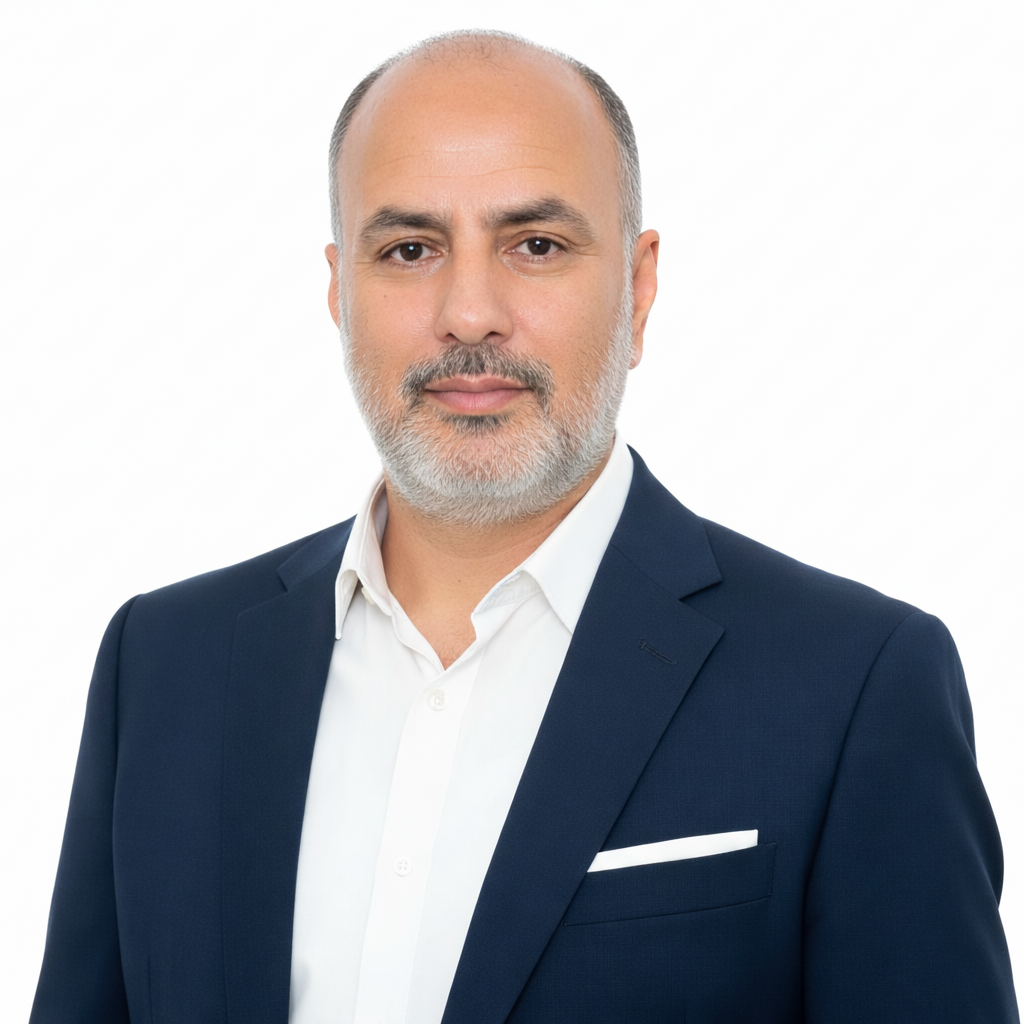
Rohit Tikoo is a published author, researcher, and content strategist with over two decades of writing experience. He is the author of nine books covering Kashmir, Indian philosophy, social issues, and contemporary thought, including Shadows Over the Valley: Operation TUPAC, Cold War Geopolitics, and the Kashmiri Pandits Exodus (2025).
His work focuses on Kashmir’s history, literature, culture, and the lived experiences of the Kashmiri Pandit community. Through extensive research, archival references, and historical analysis, he seeks to document and preserve narratives that are often overlooked in mainstream discourse. His writing on Kashmir has appeared in DAILY EXCELSIOR, HEADLINES TODAY, ONLY KASHMIR, GREATER KASHMIR, NAAD,
VITASTA, CHATTAN, AND VOICE OF SILENCE.
Through rohittikoo.com, he publishes research-based articles, essays, and commentary aimed at fostering informed discussion on Kashmir, Indian civilisation, literature, and contemporary society.