
A Kashmiri Pandit’s Perspective on the Pakistan-Occupied Kashmir Protest
I left Kashmir thirty-six years ago. My family did not leave by choice, nor had we planned to abandon the valley that our community had called home for centuries. In January 1990, a campaign of targeted killings, threats broadcast from mosque loudspeakers, and organised terror forced Kashmiri Pandits to flee. Our departure was limited to what we could manage. Since then, we could not return with dignity and security.
The pain of displacement does not disappear with time. It becomes part of daily life, a wound that never completely heals.
I write this not to revisit that tragedy, but because the events that unfolded in Rawalakot on June 7, 2026, revealed something many of us have understood for decades.
Pakistan presents itself as the defender of Kashmiri rights. Yet when Kashmiris challenge Islamabad’s authority, the response often looks very different from the rhetoric.
The Pakistan-Occupied Kashmir protest movement that emerged in June 2026 exposed that contradiction for the world to see.
The Pakistan-Occupied Kashmir Protest and the Events of June 2026
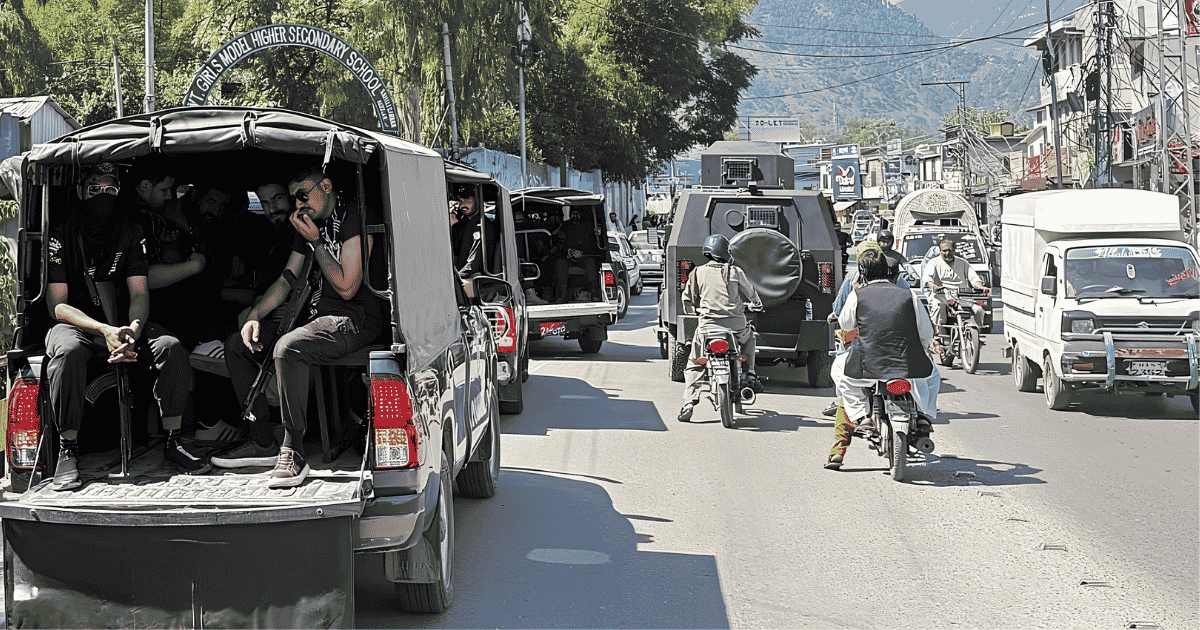
On June 5, 2026, the government of Azad Jammu and Kashmir banned the Jammu Kashmir Joint Awami Action Committee (JAAC) under anti-terrorism legislation. Two days later, security forces opened fire on protesters in Rawalakot, the capital of Poonch district. At least eleven Kashmiris were killed, and more than seventy others were injured.
Federal paramilitary troops entered Muzaffarabad, while internet services remained suspended for three consecutive days.
The sequence of events was striking. Authorities banned the organisation, detained its leaders, restricted communication, and deployed additional security forces. When people still came out to protest, security personnel opened fire.
For a country that has spent nearly eight decades portraying itself as the champion of Kashmiri self-determination, the optics were impossible to ignore.
Who Is the JAAC?
The Jammu Kashmir Joint Awami Action Committee is not a militant organisation by any reasonable definition. It emerged as a coalition of traders, lawyers, transporters, students, and ordinary citizens who came together in 2023 because everyday life under Islamabad’s administration had become increasingly difficult.
The group organised several protest campaigns and negotiations over public grievances. According to its supporters, agreements reached with authorities repeatedly remained unfulfilled, while economic and governance concerns continued to grow.
When the JAAC announced a major rally for June 9, Islamabad responded by banning the organisation, arresting key figures, suspending internet services, and deploying federal forces across the region.
The protesters proceeded anyway.
The result was deadly.
Kashmir’s Civilisational Identity and the Question of Ownership
Long before modern political disputes emerged, Kashmir occupied a unique place in the civilisational history of the Indian subcontinent.
It was home to Sharada Peeth, one of the great centres of learning in the region. Scholars travelled across the subcontinent to study there. The valley drew its identity from the sacred Vitasta River and produced cultural icons such as Lalleswari and Habba Khatoon, whose poetry continues to shape Kashmiri consciousness.
Kashmir’s connection with Indian civilisation was not created in 1947. It stretches back across millennia.
The Kashmiri Pandit Connection
The Kashmiri Pandits remain deeply connected to that legacy. Their ancestors built temples such as Martand, produced Kalhana’s Rajatarangini, and contributed significantly to philosophy, literature, mathematics, and governance.
For many Pandits, exile is not simply displacement from a geographical location. It is separation from a homeland that forms an essential part of their historical and cultural identity.
Pakistan’s connection to Kashmir rests on a very different foundation. It emerged from the tribal invasion of October 1947 and the subsequent occupation of the western districts of Jammu and Kashmir.
Those territories were later branded as “Azad” Kashmir.
Many residents continue to question whether the political reality matches the label
Democracy in Jammu and Kashmir Versus Political Control in Pakistan-Occupied Kashmir
In September and October 2024, the people of Jammu and Kashmir elected a legislative assembly for the first time in a decade. Results announced on October 8 gave the National Conference-Congress alliance a majority in the ninety-member Assembly. The National Conference won forty-two seats, Congress secured six, and the BJP won twenty-nine.
A government subsequently took office under Omar Abdullah.
There are legitimate debates regarding statehood and the full restoration of constitutional rights. Those debates deserve serious attention. However, the election itself demonstrated a willingness to allow democratic participation and electoral competition.
The situation in Pakistan-administered Kashmir during June 2026 appeared very different.
The Controversy Over Reserved Seats
The AJK Legislative Assembly consists of fifty-three seats. Twelve of those seats are reserved for refugees who left Jammu and Kashmir in 1947 and 1965 and now reside in Pakistani cities such as Karachi, Lahore, Rawalpindi, and Sialkot.
Six seats represent refugees from the Jammu division, estimated at around 434,000 people. Six represent refugees from the Kashmir Valley, whose population is estimated at approximately 30,000.
These seats are contested from mainland Pakistan rather than from within AJK itself. Critics argue that this arrangement gives Islamabad’s national parties significant influence over who ultimately governs in Muzaffarabad.
The JAAC demanded that these twelve seats be abolished.
On June 7, the AJK Supreme Court ruled that the seats enjoy constitutional protection. Islamabad’s position was equally clear. The arrangement would remain unchanged.
India’s Alternative Approach
India has adopted a different approach regarding representation for residents of Pakistan-occupied Jammu and Kashmir.
The Delimitation of Constituencies Bill 2026 proposes reserving twenty-four seats in the Jammu and Kashmir Legislative Assembly for residents of the Pakistan-occupied territories. These seats would remain vacant until India’s sovereignty over the territory is restored.
Supporters view the provision as a constitutional commitment rather than a mechanism of political control.
The contrast between the two systems remains significant.
The Economic Grievances Behind the Pakistan-Occupied Kashmir Protest
Politics was not the only issue driving public anger.
Economic concerns played an equally important role in the Pakistan-occupied Kashmir protest movement.
The rivers and mountains of the region generate substantial hydropower for Pakistan’s national grid. Projects such as Neelum-Jhelum contribute electricity that powers homes and industries across the country.
The Neelum, Jhelum, and Poonch rivers have shaped the region’s history for centuries. Today, they also help sustain Pakistan’s energy infrastructure.
Yet many residents of AJK continue to complain about rising electricity bills, subsidy reductions, and unreliable power supply.
These concerns became central demands of the protest movement.
A Region Rich in Resources, Yet Frustrated
Political instability has added to public frustration.
Governments in AJK have changed frequently in recent years. Critics argue that political outcomes often depend more on calculations in Islamabad than on the preferences of voters in Muzaffarabad or Mirpur.
Many residents believe the system prioritises the interests of the federal centre while limiting local influence over major decisions.
That perception has fuelled resentment across large sections of society.
International Reactions to the Pakistan-Occupied Kashmir Protest
The events in June 2026 attracted international attention.
Amnesty International criticised the ban on the JAAC and expressed concern about arbitrary arrests, internet shutdowns, and the use of excessive force against protesters.
Several members of the British Parliament’s All-Party Parliamentary Group on Kashmir formally raised concerns with the Foreign Secretary.
The United States and other Western governments also issued advisories ahead of the June 9 rally period.
Pakistan’s Ministry of Foreign Affairs rejected outside involvement and described the matter as an internal issue.
That position stood in sharp contrast to Islamabad’s long-standing international campaign on Kashmir.
For decades, Pakistan has argued at the United Nations, the Organisation of Islamic Cooperation, and numerous diplomatic forums that Kashmir requires international attention.
Yet when Kashmiris within Pakistan-administered territory challenged their own government, international concern was suddenly characterised as interference.
The contradiction was difficult to overlook.
What the Rawalakot Killings Reveal About Pakistan’s Kashmir Policy
For members of the Kashmiri Pandit community, the events in Rawalakot felt painfully familiar.
We watched from across the Line of Control as terror networks operating from Pakistan-administered territory contributed to our displacement in 1990. Over the past three decades, we have observed how Kashmiris who become inconvenient to Islamabad’s strategic interests often find themselves marginalised.
The methods may change with time, but the broader pattern remains recognisable.
The men killed in Rawalakot were not political abstractions. They were fathers, sons, neighbours, and shopkeepers. They were ordinary Kashmiris who demanded greater influence over their own political future.
The refugees whose legacy Islamabad invokes while defending the twelve reserved seats left in Kashmir generations ago.
The people confronting bullets in Rawalakot live there today.
That distinction matters.
The Pakistan-Occupied Kashmir Protest and the Lessons of History
No diplomatic speech can erase the reality of what happened in June 2026.
The deaths in Rawalakot raised serious questions about representation, accountability, and political rights in Pakistan-administered Kashmir. They also exposed a gap between Islamabad’s international rhetoric and its domestic conduct.
The Neelum River flowed through this land long before Pakistan came into existence. It has witnessed centuries of Kashmir’s history and carried the stories of generations who called the region home.
It will continue to flow long after contemporary political narratives have faded.
For many Kashmiris, that continuity offers a more enduring connection to the region than any political slogan ever could.
FAQ Section
What was the Pakistan-occupied Kashmir protest of 2026?
The Pakistan-occupied Kashmir protest movement centred on demands for political representation, economic relief, lower electricity costs, and greater local autonomy in Azad Jammu and Kashmir.
What happened in Rawalakot on June 7, 2026?
Security forces opened fire on protesters in Rawalakot after authorities banned the Jammu Kashmir Joint Awami Action Committee. At least eleven people were killed, and more than seventy were injured.
Why did the JAAC oppose the reserved seats system?
The JAAC argued that twelve reserved assembly seats contested from mainland Pakistan gave Islamabad disproportionate influence over AJK politics.
Why is the protest significant?
The protests highlighted concerns regarding representation, governance, human rights, and the relationship between Islamabad and the residents of Pakistan-administered Kashmir.
How does India treat representation for Pakistan-occupied Jammu and Kashmir?
The Delimitation of Constituencies Bill 2026 proposes twenty-four reserved seats in the Jammu and Kashmir Legislative Assembly for residents of Pakistan-occupied territories, which would remain vacant until sovereignty is restored.
Rohit Tikoo is a Delhi-based writer and published author specialising in Kashmir history and Indian philosophy. He is a regular contributor to Daily Excelsior and writes at rohittikoo.com.
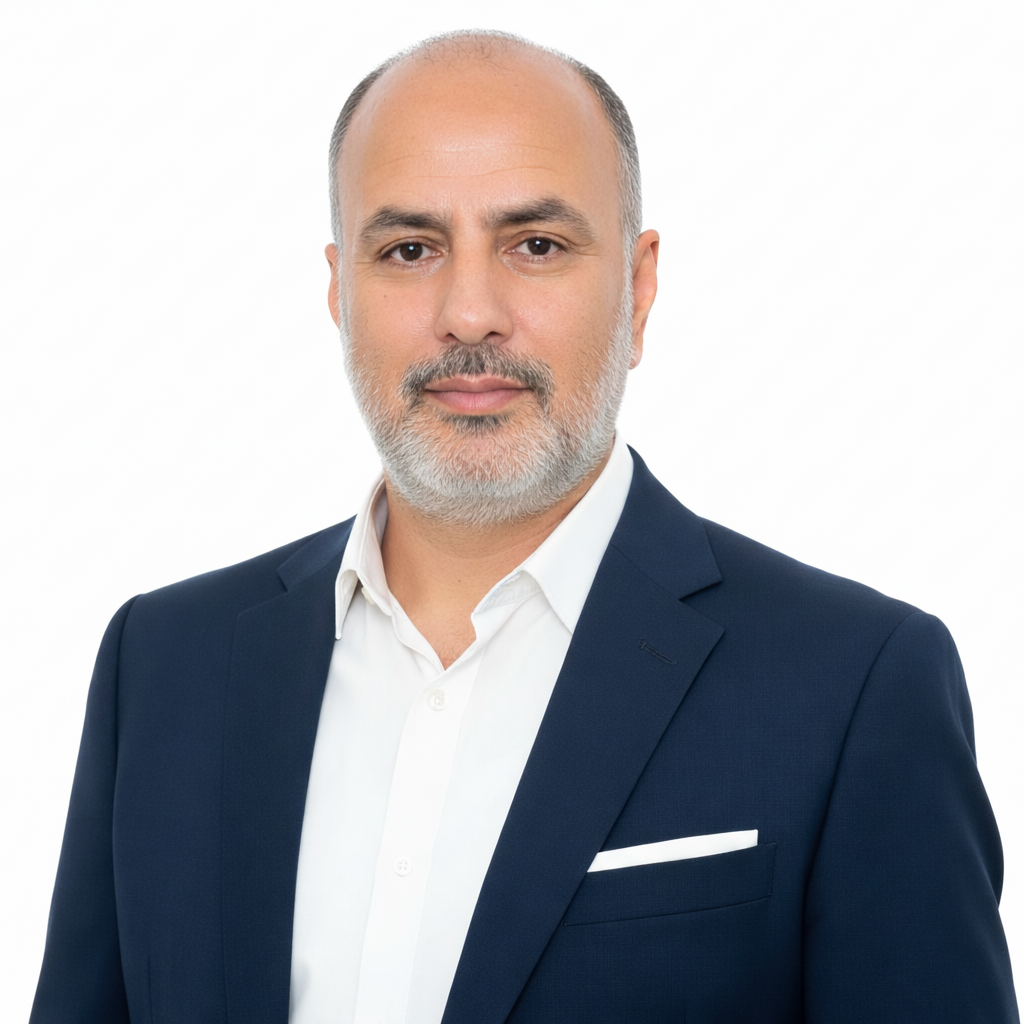
Rohit Tikoo is a published author, researcher, and content strategist with over two decades of writing experience. He is the author of nine books covering Kashmir, Indian philosophy, social issues, and contemporary thought, including Shadows Over the Valley: Operation TUPAC, Cold War Geopolitics, and the Kashmiri Pandits Exodus (2025).
His work focuses on Kashmir’s history, literature, culture, and the lived experiences of the Kashmiri Pandit community. Through extensive research, archival references, and historical analysis, he seeks to document and preserve narratives that are often overlooked in mainstream discourse. His writing on Kashmir has appeared in DAILY EXCELSIOR, HEADLINES TODAY, ONLY KASHMIR, GREATER KASHMIR, NAAD,
VITASTA, CHATTAN, AND VOICE OF SILENCE.
Through rohittikoo.com, he publishes research-based articles, essays, and commentary aimed at fostering informed discussion on Kashmir, Indian civilisation, literature, and contemporary society.