Who Was Sarla Bhat of Kashmir?
By Rohit Tikoo | Kashmir Historian · Kashmir History Project · Kashmiri Pandit
Originally Published: 2024 | Comprehensively Updated: March 2026 | Reading Time: ~13 minutes
A Note From the Author
I have written about atrocities. I have documented massacres, named the murdered, and traced the arc of an exodus that erased my community from a land we called home for three thousand years. But some stories still stop me cold. Sarla Bhat is one of them. She was twenty-seven. She was a nurse, one of those rare human beings who had chosen, as her life’s purpose, to heal others. She stayed in the Valley while everyone else ran. She refused to leave. And for that refusal, for that act of stubborn, beautiful courage, militants took her, tortured her, and murdered her. I write this so that her name is never reduced to a statistic. She was a person. She deserves to be remembered as one.
Who Was Sarla Bhat?
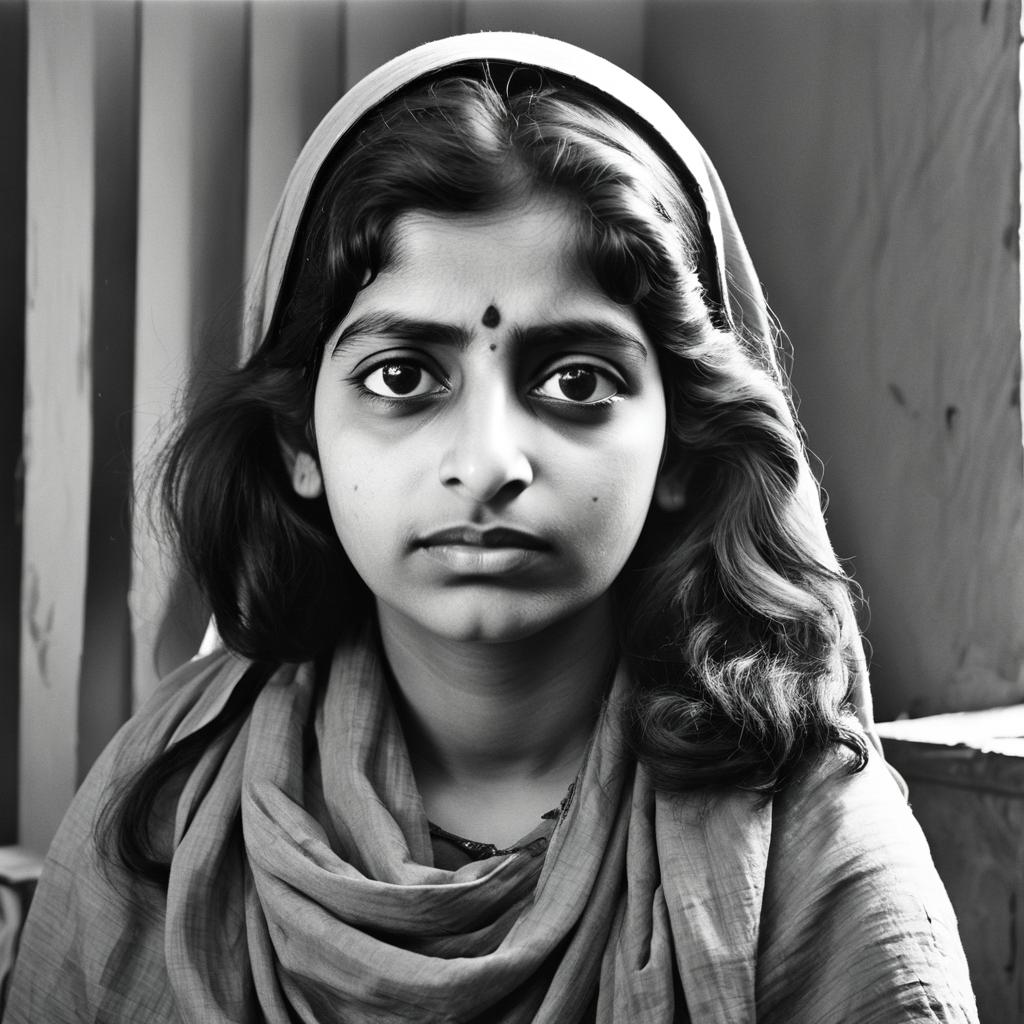
Sarla Bhat was a 27-year-old Kashmiri Pandit woman from Anantnag in South Kashmir, working as a nurse at the prestigious Sher-e-Kashmir Institute of Medical Sciences (SKIMS) in Soura, Srinagar. She worked in the neonatology ward, caring for the most vulnerable of patients. She was, by every account of those who knew her, someone who chose to nurse not as a profession but as a calling.
She was also, in the winter of 1989–90, a woman who chose to stay.
That choice — to remain at her post while the Valley descended into violence and while Kashmiri Pandits were being threatened, killed, and driven from their homes — is the heart of Sarla Bhat’s story. It is why militants targeted her. It is why they murdered her. And it is why, thirty-five years later, her name still matters.
Key Facts at a Glance
| Full Name | Sarla Bhat |
| Age at Death | 27 years old |
| Home District | Anantnag, South Kashmir |
| Profession | Nurse, Neonatology Ward, SKIMS, Soura, Srinagar |
| Hostel | Habba Khatoon Hostel, SKIMS campus |
| Date of Abduction | 18 April 1990 |
| Body Discovered | 19 April 1990, Umar Colony, Mallabagh, Soura |
| Perpetrators | Jammu and Kashmir Liberation Front (JKLF) operatives |
| FIR Registered | FIR No. 56/1990, Police Station Nigeen, Srinagar |
| Original Investigation | Stalled within months; no arrests for 35 years |
| Case Transferred to SIA | 2022, by the J&K administration |
| SIA Raids | 12 August 2025: eight locations in Srinagar were raided, and incriminating evidence, including documents and digital data, was recovered |
| Latest Development | December 2025: DNA testing sought by investigators to strengthen the case for prosecution |
The Kashmir of 1990: What Sarla Walked Into
To understand Sarla Bhat’s courage, you must first understand what January 1990 felt like in the Kashmir Valley. It did not feel like a political crisis. It felt like the end of the world.
The Jammu and Kashmir Liberation Front and other Pakistan-backed militant organisations had, by then, moved from targeted killings of individual leaders and judges to a systematic campaign of terror against the entire Kashmiri Pandit community. Mosque loudspeakers in January 1990 broadcast a three-word ultimatum in the dead of night: Raliv, Galiv ya TChaaliv — convert, leave, or perish. Pakistan-backed groups such as the JKLF and Hizbul Mujahideen marked Pandit homes, threatened families, and killed those who refused to submit.
According to a 2008 J&K Police report, militants killed 109 Kashmiri Pandits in 1990 alone — 209 from 1989 onwards — with chargesheets filed in only 24 of 140 registered cases. Hundreds of thousands of Pandits fled in the weeks between January and March, leaving in the dark with whatever they could carry, heading towards Jammu and Delhi. For most of them, it turned out to be permanent.
By April 1990, the Valley had been almost completely emptied of its Hindu population. Those who remained were there out of necessity, defiance, or both. Sarla Bhat was one of them. Colleagues and investigators later recalled that she openly refused militant diktats ordering Kashmiri Pandits to quit government jobs and leave the Valley. She continued showing up to SKIMS. She continued caring for her patients. That defiance marked her.
The Abduction: 18 April 1990
On 18 April 1990, JKLF operatives abducted Sarla Bhat from the Habba Khatoon Hostel on the SKIMS campus. According to investigative accounts, as she was returning from the hospital to her hostel, militants intercepted her within the SKIMS premises and took her away.
The timing was not incidental. Sarla’s killing coincided with the hospitalisation of JKLF leader Yasin Malik at SKIMS, who had been wounded during a security operation and gained admission to the hospital posing as a civilian. During the security operation around Malik’s stay, the hospital’s then Head of Department, Ahad Guroo, was arrested and later released after interrogation. Investigators believe JKLF operatives subsequently scrutinised hospital staff profiles, looking for anyone who might have shared information with the authorities.
A senior investigator noted: “It is said that someone close to Sarla gave her name, saying she was a Kashmiri Pandit and therefore an obvious suspect.” Investigators link the accusation against her to her refusal to follow militant orders, rather than to any actual act of informing. The note found on her body was not a finding based on evidence. It was a fabricated justification for a murder already decided.
JKLF operatives held Sarla for several days. According to investigators, they subjected her to gang rape and torture before shooting her.
The Discovery: 19 April 1990
On the morning of 19 April 1990, police found Sarla Bhat’s bullet-riddled body in the thoroughfare at Umar Colony, Mallabagh, Soura. Her body bore multiple bullet wounds and visible signs of torture. Beside her lay a handwritten note falsely branding her a police informant, bearing two signatures from JKLF operatives claiming responsibility for the killing.
Her family received the news — and then came a cruelty that compounds the original crime. When her grieving father, Shambu Nath Bhat, attempted to perform her cremation in Anantnag, militants threatened those who gathered. Neighbours and family members received warnings to stay away. The family rushed through the last rites in fear, as Indu Bushan Zutshi, a neighbour, later recalled: “Two youths instructed us to stop and go back. They said Sarla was an informer, and militants did not want anyone to cremate her.” Even in death, her murderers denied her dignity.
Police registered FIR No. 56/1990 at Police Station Nigeen under Sections 302 and 120B of the IPC and Section 3(2) of TADA.
The Betrayal of Silence: 35 Years Without Justice
On paper, an investigation existed. In practice, it collapsed almost immediately.
Officials later acknowledged that the climate of terror during the insurgency, combined with witness intimidation and limited police capacity, made any meaningful investigation impossible. As one senior SIA official explained: “During the nineties, terrorism was at its peak. The atmosphere in Kashmir was so charged that the police and investigating officers were hesitant to take up these cases. In a few cases, we even lost officers to terrorists.”
For decades, the case remained cold. In 2017, the Supreme Court of India dismissed a petition seeking an investigation into the killings of hundreds of Kashmiri Pandits, citing the passage of time and the unlikelihood of finding evidence. The organisation Roots in Kashmir filed a curative petition; the Court rejected it in 2023 as well. Those dismissals sent the Kashmiri Pandit community a message they had been receiving in different forms since 1990 — that their suffering was inconvenient, that time had become a pardon for the perpetrators, that the state’s patience for their grief had a deadline.
According to the 2008 J&K Police report, of 140 cases registered in connection with targeted killings of Kashmiri Pandits, chargesheets were filed in only 24. Sarla Bhat’s case was among those in which investigators failed to file a chargesheet or identify the perpetrators.
2022: The Case Transfers to the SIA
In 2022, the J&K administration transferred Sarla Bhat’s case to the State Investigation Agency (SIA), the specialist body tasked with fast-tracking terror-related cases. The transfer was part of a broader policy shift under Lieutenant Governor Manoj Sinha’s administration, which had signalled a determination to revive forgotten cases of targeted killings of Kashmiri Pandits. The SIA had previously reopened the 1989 murder case of retired judge Neelkanth Ganjoo, who JKLF operatives had assassinated in Srinagar. The Sarla Bhat case followed the same track.
August 2025: The SIA Raids
On 12 August 2025, the SIA acted.
The agency raided eight locations across central Srinagar as part of its ongoing investigation into FIR No. 56/1990. The searches targeted the residences of former members of the banned JKLF. The SIA recovered incriminating evidence, including documents and digital data material, its investigators said would help unravel the full terrorist conspiracy behind the murder.
The SIA named former JKLF operatives whose properties investigators searched, including:
- Javed Ahmed Mir, alias Nalka, son of Ghulam Nabi Mir, resident of Zainakadal
- Mohammad Yasin Malik, son of Ghulam Qadir Malik, resident of Maisuma, Srinagar (currently imprisoned in Tihar Jail)
- Peer Noor ul Haq Shah, alias Air Marshal, son of Peer Ghulam Rasool Shah, resident of Ilahi Bagh, Buchpora, Srinagar
- Bashir Ahmad Gojri
- Feroz Ahmad Khan
- Relatives of the late Abdul Hamid Sheikh
- Additional associates whose properties investigators searched across the eight locations
The inclusion of Yasin Malik in the raids carries particular weight. Malik was one of four founding militants of the JKLF’s armed wing in the Kashmir Valley — the group known by the acronym HAJY, for its members: Hamid Sheikh, Ashfaq Wani, Javed Mir, and Yasin Malik. He currently serves a life sentence in Tihar Jail on terrorism and waging-war-against-India charges. Investigators are examining whether evidence connects him directly to Sarla Bhat’s murder or establishes command responsibility for it.
In 2009, Ahmed Ali Fayyaz, the journalist and former editor, interviewed a former JKLF operative on his programme Face to Face on Take-1 Channel and asked directly about Sarla Bhat’s killing. The interviewee acknowledged that elements within the organisation had carried out acts that went beyond its stated orders, and when pressed on the JKLF’s public claim of responsibility for the killing, deflected rather than denied. It was as close as anyone connected to the organisation had come to an acknowledgement on record, and investigators now have it documented.
December 2025: DNA Testing Sought
The investigation took a further step in December 2025. Investigators sought DNA testing as part of efforts to strengthen the case for prosecution, according to reporting by the Deccan Chronicle. The SIA confirmed the recovered material would undergo forensic and investigative examination. This marks the first time forensic science has entered the Sarla Bhat case — thirty-five years after her murder.
Girija Tickoo: A Horrifying Pattern
Sarla Bhat was not the only one. She was part of a pattern — a deliberate and organised campaign of terror against Kashmiri Pandit women that runs as one of the darkest threads through 1990.
Girija Tickoo, a laboratory assistant at Government High School, Trehgam, suffered a fate equally horrifying in the same period. After fleeing the Valley with her family to Jammu in the wake of the exodus, she was lured back in June 1990 by a colleague’s phone call claiming the situation had improved and that she could come to Bandipora to collect her salary. Militants abducted her, gang-raped her, and then killed her by cutting her body apart with a mechanical saw while she was still alive.
These crimes were not spontaneous acts of violence by rogue individuals. They were systematic. Militants claimed them publicly. The perpetrators designed them to achieve exactly what they achieved: to make remaining in Kashmir feel like a death sentence, and to drive the remaining Hindu community out of the Valley through the specific terror of violence against women.
The government of the day remained silent. The world largely looked away.
The Handwritten Note: What It Said, and What It Did Not Say
The handwritten note found beside Sarla Bhat’s body accused her of informing for the CID. Investigators have since linked the accusation not to any actual act of informing, but to her open defiance of militant diktats ordering Kashmiri Pandits to quit their government jobs and leave the Valley. The note served a dual purpose: it provided internal justification for the killing within the JKLF’s ranks, and it issued a public warning to every other Kashmiri Pandit who had remained at a government post. The message was direct — staying is collaboration, and staying makes you a target.
The SIA has confirmed that investigators are conducting handwriting analysis on the note. After thirty-five years, the same piece of paper a JKLF operative scrawled in 1990 may become the evidence that identifies and convicts Sarla Bhat’s killers.
Timeline: Sarla Bhat’s Story
Late 1980s — Sarla Bhat from Anantnag qualifies as a nurse and joins SKIMS, Soura, Srinagar, working in the neonatology ward.
Winter 1989–90 — The militant campaign against Kashmiri Pandits intensifies. Pakistan-backed groups, including the JKLF issue diktats ordering Pandits to quit government jobs and leave the Valley. Mosque loudspeakers broadcast threats in the night. Sarla Bhat openly refuses to comply and continues working at SKIMS.
January–March 1990 — The mass exodus of Kashmiri Pandits from the Valley begins. Hundreds of thousands flee towards Jammu and Delhi. Sarla stays.
April 1990 — JKLF leader Yasin Malik, wounded during a security operation, gains admission to SKIMS posing as a civilian. During the related security activity, the hospital’s Head of Department, Ahad Guroo, is arrested and later released after interrogation. JKLF operatives begin scrutinising hospital staff profiles.
18 April 1990 — JKLF operatives abduct Sarla Bhat from the Habba Khatoon Hostel on the SKIMS campus.
19 April 1990 — Police find Sarla Bhat’s bullet-riddled body at Umar Colony, Mallabagh, Soura. A handwritten note bearing JKLF signatures falsely accuses her of being a police informant.
April 1990 — Police register FIR No. 56/1990 at Police Station Nigeen. The investigation stalls within months.
2009 — A former JKLF operative makes an indirect acknowledgement of JKLF responsibility for Sarla Bhat’s killing in a televised interview with journalist Ahmed Ali Fayyaz on Take-1 Channel.
2017 — The Supreme Court of India dismisses a petition seeking an investigation into hundreds of Kashmiri Pandit killings from the 1990s.
2022 — The J&K administration transfers Sarla Bhat’s case to the SIA for fresh investigation.
2023 — The Supreme Court of India rejects a curative petition by the organisation Roots in Kashmir seeking revival of investigations into 1990-era killings.
12 August 2025 — The SIA raids eight locations in Srinagar, targeting former JKLF operatives connected to the case, including the Maisuma residence of jailed JKLF chief Yasin Malik. Investigators recover incriminating evidence, including documents and digital data.
December 2025 — Investigators seek DNA testing to strengthen the prosecution’s case. The SIA confirms the recovered material is undergoing forensic examination.
Frequently Asked Questions
- Who was Sarla Bhat?
Sarla Bhat was a 27-year-old Kashmiri Pandit nurse from Anantnag who worked in the neonatology ward at SKIMS in Soura, Srinagar. In 1990, at the height of the militant campaign against Kashmiri Pandits, she chose to remain at her post despite explicit threats. JKLF operatives abducted her from the Habba Khatoon Hostel on 18 April 1990, subjected her to gang rape and torture, and murdered her. Police found her body on 19 April 1990 in Umar Colony, Mallabagh, Soura.
- Why did JKLF target Sarla Bhat?
Investigators link the targeting of Sarla Bhat to her open refusal to comply with militant diktats ordering Kashmiri Pandits to quit their government jobs and leave the Valley. The handwritten note found beside her body accused her of being a police informant. Investigators have since established that militants used this accusation as a standard pretext in targeted killings of Kashmiri Pandits who refused to submit to their orders. It was a fabricated charge, not a finding.
- Who carried out the killing?
The Jammu and Kashmir Liberation Front claimed responsibility through a signed note. The SIA’s 2025 investigation raided the properties of former JKLF operatives in connection with the case, including Javed Ahmed Mir alias Nalka, Peer Noor ul Haq Shah alias Air Marshal, and the Srinagar residence of jailed JKLF chief Yasin Malik. Investigators are also pursuing leads connected to at least one accused believed to be in Pakistan.
- What happened to the original investigation?
Police registered FIR No. 56/1990 at the Nigeen Police Station in April 1990. The investigation made no meaningful progress. The climate of terror, witness intimidation, and the broader breakdown of normal law enforcement in the Valley during the insurgency effectively froze the case. No arrests followed for over three decades.
- What did the SIA do in 2025?
On 12 August 2025, the SIA raided eight locations in Srinagar, targeting residences linked to former JKLF operatives. Investigators recovered incriminating documents and digital data. The SIA confirmed the recovered material is undergoing forensic examination, including handwriting analysis of the note found on Sarla Bhat’s body. In December 2025, investigators additionally sought DNA testing to strengthen the prosecution’s case.
- Will there be a conviction?
The SIA itself has been candid about the obstacles. Several suspects are deceased, key witnesses are old or unavailable, and at least one accused is believed to be in Pakistan. But investigators are pursuing the case with forensic methods not previously applied, and the J&K administration has committed to bringing perpetrators of 1990-era killings to account regardless of the time elapsed. Whether conviction follows remains to be seen. What has changed is that the case now has active investigators, forensic processes, and named suspects.
- How does Sarla Bhat’s story connect to the Kashmiri Pandit exodus?
Sarla Bhat’s murder was both an individual crime and a calculated act of terror designed to make it impossible for Kashmiri Pandits to remain in the Valley. Her killing was part of the same campaign of ethnic cleansing that drove hundreds of thousands of Kashmiri Pandits from their homes in 1990. Understanding her story is understanding why the exodus happened, and why, for so many in my community, it has never truly ended.
A Bleak Search for Justice: But the Search Has Resumed
Over three decades, Sarla Bhat’s family received no justice. Successive governments heard their pleas and looked away. The Supreme Court of India dismissed petitions twice. Case files gathered dust.
August 2025 changed something. It did not deliver justice — justice is not yet delivered. But it delivered, for the first time, the credible possibility of it. The SIA’s raids were not symbolic gestures. Investigators recovered evidence. They named suspects. They signalled that the passage of time had not become a pardon.
Whether conviction follows, only time will tell. The obstacles are real, and the SIA has been candid about them. But Sarla Bhat’s name now sits at the top of an active investigation, not a closed file. For a community that has been told, in every possible way, that their dead do not matter, that is nothing at all.
Remember Her Name
Sarla Bhat lived to give life. She worked every day to heal the sick and care for the newborn. She stayed in a Valley that was on fire because she refused to be driven from her home.
Militants killed her for that refusal. They killed her for being a Kashmiri Pandit who chose to stay. They killed her for showing up to work in defiance of people who had decided her community had no right to remain.
Thirty-five years later, her case is active. Her name is inside an ongoing investigation. Forensic processes that her killers never anticipated are now working through the evidence they left behind.
But the least any of us can do — the very least — is say her name. And mean it.
Sarla Bhat. Anantnag. SKIMS. 27 years old. Murdered on 19 April 1990.
Let her soul rest in peace. Let her name never be forgotten.
Sources and References
Primary Investigation Records FIR No. 56/1990, Police Station Nigeen, Srinagar, under Sections 302 and 120B IPC and Section 3(2) TADA · J&K State Investigation Agency (SIA) press release, 12 August 2025 · J&K Police internal report on targeted killings of Kashmiri Pandits, 2008
Journalism and Ground Reports
- The Print — A Handwritten Note, 2 Signatures, Only Dead Ends in Kashmir: Sarla Bhat Murder Is No Easy Case (17 August 2025)
- Deccan Chronicle — DNA Test Sought in 1990 Kashmiri Pandit Murder (14 December 2025)
- The Week — Who Was Kashmiri Pandit Nurse Sarla Bhat? J&K SIA Conducts Massive Raids (12 August 2025)
- Satyaagrah — J&K SIA Reopens 1990 Nurse Sarla Bhat’s Rape-Murder Case (August 2025)
- Organiser — Justice After 35 Years: Know Who Is Sarla Bhat (13 August 2025)
- Rising Kashmir — SIA raids coverage (12–13 August 2025)
On Girija Tickoo
- Jammu Kashmir Now — Brutal Killing of Kashmiri Woman Girija Tickoo (25 June 2019)
- Kashmir Pandit Martyrs — Smt Girja Tickoo
Television Record Ahmed Ali Fayyaz, Face to Face, Take-1 Channel, 2009, interview with former JKLF operative on the Sarla Bhat killing
Memoirs and First-Hand Accounts Indu Bushan Zutshi, neighbour of the Bhat family in Anantnag, as cited in coverage of the case · Moti Lal, Sarla Bhat’s uncle, interview with The Print, August 2025
On the HAJY Group and JKLF
- Wikipedia — Jammu Kashmir Liberation Front
- Wikipedia — Yasin Malik
Broader Context R. Tikoo, Shadows Over The Valley: Operation Tupac, Cold War, Geopolitics and the Kashmiri Pandit Exodus · R. Tikoo, Kashmiri Pandits: A Tale of Solitude and Survival · R. Tikoo, Uprooted and Forlorn: The Tale of Kashmiri Pandits in Exile
About the Author: Rohit Tikoo is a Kashmiri historian and researcher dedicated to recovering the documented truth of Kashmir’s history. As a Kashmiri Pandit, he writes both as a scholar and as a member of the community whose existence testifies to what happens when the forces of 1990 run unchecked. He is the author of Shadows Over The Valley, Uprooted and Forlorn, and Kashmiri Pandits: A Tale of Solitude and Survival.