
The Kashmir book row over a book in Jammu & Kashmir has revived an important national conversation. Regardless of politics, educational resources should teach history honestly while making it clear that terrorism can never be a source of inspiration.
Every society eventually confronts the same uncomfortable question: how should it teach the darkest chapters of its own history?
The answer matters because history is far more than a record of events.
It shapes how young people understand justice, violence, democracy and the choices that define a nation. Every generation inherits the past, but each generation also decides how that past will be remembered.
That responsibility places an enormous burden on educators, historians and those entrusted with deciding what finds its way into classrooms and school libraries.
The recent Kashmir book row surrounding a book procured for government school libraries in Jammu & Kashmir has once again brought this debate into the public domain. Much of the discussion has centred on whether the books glorified terrorists, whether they belonged in school libraries, and whether the government’s response was justified.
The larger issue extends well beyond books or one administrative decision.
It asks whether educational institutions should ever present individuals who embraced terrorism in a manner that risks admiration, especially when their actions left behind generations of grief.
There is an important distinction here, one that any mature democracy must preserve. History should never be sanitised. Students should learn about insurgencies, separatist movements, political violence and terrorism.
They should understand the historical circumstances that gave rise to conflict, the failures of governments, the aspirations of different communities and the consequences of decisions made on every side.
An education that avoids uncomfortable truths is not education at all.
But neither is an education that loses sight of the human cost of violence.
Understanding why someone became a terrorist is not the same as asking students to view that individual as a hero. Historical analysis demands context, evidence and critical thinking. Hero worship demands admiration. The two should never be confused.
This distinction becomes especially important in a country like India, where terrorism has not been an abstract concept discussed in lecture halls but a lived reality experienced by millions.
The victims of terrorism rarely sought history’s attention. They were ordinary people travelling to work, worshipping in places of faith, shopping in busy markets or simply spending time with their families. They had no role in ideological battles. Yet they paid the highest price.
The recent attack in Pahalgam serves as a painful reminder. Tourists had travelled to Kashmir to experience its breathtaking landscapes, hoping to return home with memories of one of India’s most beautiful regions. Instead, families were left mourning loved ones whose only mistake was believing they could enjoy a peaceful holiday.
The attack did not merely claim lives. It deepened fear, affected livelihoods dependent on tourism and reminded Kashmiris themselves that every act of terror pushes normalcy further out of reach.
Long before Pahalgam, India witnessed the horrors of the 26/11 Mumbai attacks. For nearly three days, heavily armed terrorists turned hotels, railway stations and public spaces into scenes of devastation.
The attacks killed 166 people and injured hundreds more, but the numbers alone fail to capture the scale of the tragedy. Hotel staff sacrificed their own safety to protect guests. Police officers confronted attackers armed with little more than courage. Families spent anxious hours searching hospitals for loved ones, while an entire nation watched helplessly as one of its greatest cities came under siege.
The serial bomb blasts in Delhi, Jaipur and other cities followed a similarly cruel logic. Terrorism does not distinguish between religions, professions or political beliefs. It targets ordinary life itself. The market vendor, the student waiting for a bus, the child accompanying parents on an evening outing, none of them are combatants. Yet they become victims because terror depends not on military victory but on spreading fear among civilians.
Kashmir carries another painful memory that deserves equal attention.
The exodus of Kashmiri Pandits during the insurgency of the late 1980s and early 1990s remains one of independent India’s deepest wounds. Faced with targeted killings, intimidation and a growing sense of insecurity, thousands of families abandoned homes where generations had lived before them. Entire neighbourhoods emptied. Communities built over centuries were uprooted within months. The consequences continue to shape lives decades later, reminding us that the effects of violence rarely end when the guns fall silent.
These are not isolated episodes.
Together, they tell the story of terrorism’s true legacy.
Broken families.
Children growing up without parents.
Communities divided by fear.
Economic activity disrupted.
Tourism damaged.
Investment discouraged.
Psychological trauma that persists long after the headlines disappear.
History that devotes more attention to the motivations of terrorists than to the lives they destroyed presents an incomplete picture. It risks shifting the focus from those who suffered to those who inflicted suffering.
This is not an argument for censorship.
Democracies become stronger when difficult questions are examined openly. Students should be encouraged to explore competing historical narratives, question official accounts and develop the ability to think critically. Universities, historians and researchers must remain free to investigate uncomfortable subjects without political interference.
Schools, however, carry an additional responsibility.
Children and adolescents are still developing their moral understanding of the world. Educational resources available to them should certainly explain why conflicts emerge and how societies descend into violence. They should also make clear that deliberately targeting civilians can never become an acceptable means of pursuing political objectives.
Historical context should illuminate events.
It should never obscure ethical responsibility.
Those who argue that discussing terrorists objectively amounts to glorification misunderstand the role of history. Equally, those who present terrorists as larger-than-life personalities divorced from the consequences of their actions misunderstand it just as profoundly.
History is not merely a catalogue of names and events.
It is an exercise in judgment.
Its purpose is not only to explain what happened, but to help future generations understand why certain choices brought societies closer to peace while others plunged them into cycles of violence from which recovery took decades.
Educational institutions, therefore, have a duty to ensure that the material they recommend, whether through textbooks or school libraries, meets the highest standards of scholarship. Books should be selected through transparent processes involving historians, educators and subject experts rather than political expediency. Independent review is not censorship. It is a safeguard that ensures educational resources remain accurate, balanced and appropriate for the audience they serve.
This controversy should become an opportunity to strengthen those standards rather than merely score political points.
There is another question worth asking.
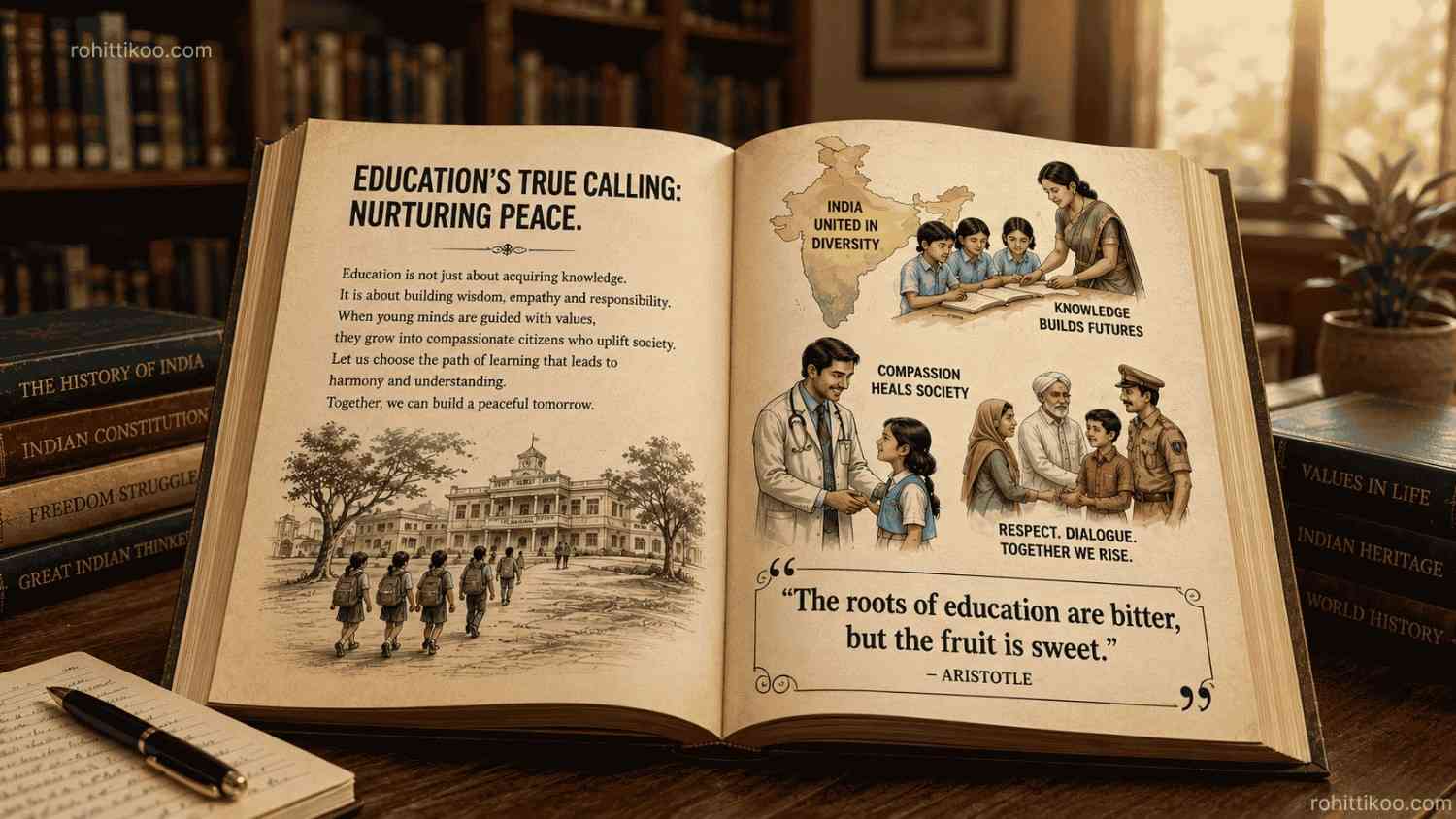
When children leave school, who do we hope they admire?
Surely not those who believed that bombs in marketplaces, bullets fired at tourists or attacks on civilians were legitimate instruments of political expression.
A nation’s heroes are found elsewhere.
They are the teachers who continued educating children despite living under the shadow of violence. They are the doctors and nurses who treated victims after bomb blasts without asking who they were. They are the police officers and soldiers who stood between civilians and those who sought to spread terror. They are journalists who documented uncomfortable truths despite intimidation. They are ordinary citizens who refused to allow hatred to define their communities.
And above all, they are the victims whose lives remind us of what terrorism truly destroys.
History must record those who chose violence.
It has no choice.
But it should never allow them to overshadow those who endured its consequences.
The measure of a civilisation is not whether it remembers its conflicts. Every nation does. The real measure is whether it remembers them honestly, with compassion for the victims, respect for the truth and enough moral clarity to distinguish between understanding violence and admiring those who inflicted it.
That is the responsibility of history.
It should also be the responsibility of every educational institution.
Explore the Ground Reality: Have Kashmiri Pandits Really Returned to Kashmir?
Read the full analysis here: Kashmiri Pandits Return to Kashmir: The 2026 Reality Check

Rohit Tikoo is a published author, researcher, and content strategist with over two decades of writing experience. He is the author of nine books covering Kashmir, Indian philosophy, social issues, and contemporary thought, including Shadows Over the Valley: Operation TUPAC, Cold War Geopolitics, and the Kashmiri Pandits Exodus (2025).
His work focuses on Kashmir’s history, literature, culture, and the lived experiences of the Kashmiri Pandit community. Through extensive research, archival references, and historical analysis, he seeks to document and preserve narratives that are often overlooked in mainstream discourse. His writing on Kashmir has appeared in DAILY EXCELSIOR, HEADLINES TODAY, ONLY KASHMIR, GREATER KASHMIR, NAAD,
VITASTA, CHATTAN, AND VOICE OF SILENCE.
Through rohittikoo.com, he publishes research-based articles, essays, and commentary aimed at fostering informed discussion on Kashmir, Indian civilisation, literature, and contemporary society.