
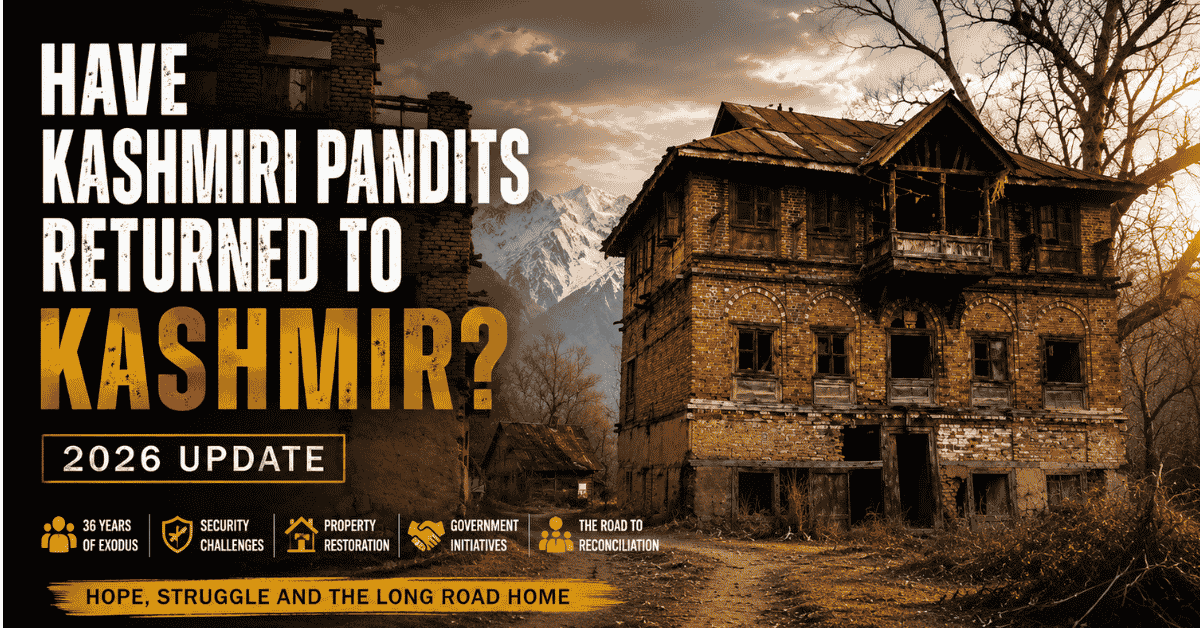
When we strip away the political rhetoric and look at the raw reality of our displaced community, the definitive answer to whether Kashmiri Pandits return to Kashmir remains one of India’s longest unresolved rehabilitation challenges.
More than three decades after our exodus, the dream of a genuine, safe, and permanent homecoming remains in a holding pattern.
Successive governments have announced financial packages, employment schemes, and housing projects worth thousands of crores of rupees. Yet our permanent resettlement has remained only a distant dream.
I am seeing this with a purpose, and here is why?
Our community organisations estimate that around 3.5 lakh Kashmiri Pandits were displaced during the 1989–90 exodus.
Conversely, official records from the Ministry of Home Affairs list roughly 62,000 registered migrant families because they count families rather than individuals. The gap between the two is a story in itself about how bureaucracies measure human catastrophe: one counts our people, the other counts files.
In 2008, New Delhi launched the Prime Minister’s Rehabilitation Package, worth ₹1,618.40 crore, aiming to provide us with housing, employment, and financial assistance. In 2015, the Union Government added roughly 3,000 more government jobs and further transit accommodation alongside the hundreds of transit flats already built.
A total of 6,000 government jobs were sanctioned under these packages, with nearly 5,896 positions filled by 2026.
None of this is disputed, and none of it is small. Yet, eighteen years later, the number of our families who have permanently resettled under this specific framework remains extremely small. Many observers describe the figure as negligible in relation to our original displacement. This is not a rehabilitation programme designed to move a community back into its homeland. At best, it is a jobs programme wearing a rehabilitation label.
Recent Policy Shifts and Our Historical Realities
What 2026 Actually Got Right
To be fair to this year, and I try to be fair even when writing about my own community’s unhealed wound, 2026 has not been empty of movement. Property recovery drives have restored more than 3,729 kanals of land to displaced owners across several districts.
The Jammu and Kashmir administration has also announced plans to revive our rehabilitation apex committee. Land mutation and inheritance cases, stalled for decades, are reportedly being processed again.
These are not cosmetic gestures. Land is the one thing that cannot be issued through a government order alone. Restoring it means someone, somewhere, physically vacated an encroachment. That takes more political will than another press release ever will. As detailed in the recent administrative updates reported by the Kashmir Observer’s property restoration coverage, over 844 kanals have been aggressively reclaimed since late 2024 alone under the Migrant Immovable Property Act.
However, progress on land restitution and progress on human return are two different currencies. We cannot pay off one with the other.
The Timeline of Our Displacement and Policy Responses
- 1989–90 (The Rupture): Militancy escalates across the Valley. Targeted killings, intimidation, and threats delivered to specific names on specific doors force around 3.5 lakh of us to leave. Most of us depart within weeks, many with nothing but the clothes on their backs and whatever fits in a single suitcase. I was there. This is not a statistic I read about. This is a childhood I lived through.
- 2008 (The Package): An allocation of ₹1,618.40 crore brings a promise that housing, jobs, and financial assistance will bring us home.
- 2015 (The Top-Up): Another 3,000 government jobs and more transit flats are introduced. The word “transit” does a lot of quiet, dishonest work here. These accommodations were built to be temporary, but in practice, they are where entire families among us have now spent more than fifteen years of their lives.
- 2020–22 (The Reminder): A series of targeted killings against minority-community members reopens every wound the Valley spent two decades trying to bandage. For our families weighing whether to return, these attacks answer the question before it is even fully asked.
- 2026 (The Cautious Turn): Land restoration gathers pace, the apex committee is set to be revived, and our community organisations resume structured dialogue with the administration. It is cautious, yes, but it is movement.
Evaluating the Impact of Rehabilitation Schemes
Inputs, Outputs, and the Lie of Good Intentions
Public policy likes to separate its work into inputs, outputs, and outcomes. An input is money allocated. An output is a job created or a house built. An outcome is whether the policy actually did what it was meant to do.
Governments have been diligent about inputs and outputs regarding our welfare. They approved budgets, implemented employment packages, constructed transit accommodations, and processed applications. Each of these required real administrative effort, and we will not pretend otherwise.
But the objective was never just to spend ₹1,618.40 crore. The objective was for our families to choose, of their own free will, to go home. Measured against that single outcome, the record speaks for itself. Two apparently contradictory sentences are both true at once: the government invested serious money and manpower, and our large-scale permanent rehabilitation has still not happened. That is not a paradox. That is what happens when you measure the wrong thing for eighteen years and call it success.
Why a Job Was Never Going to Be Enough
A government employee from our community can work in Srinagar through office hours and go home each evening to a transit flat under heightened security. That person has technically returned to the Valley, but has the family truly returned to community life? Has the door of the ancestral house been reopened? Have the ownership papers been restored? Has a festival been celebrated in Habba Kadal, in Rainawari, or in the very lanes where three generations before us were born?
Employment answers an economic question. Rehabilitation asks an entirely different question about belonging, about permanence, and about whether a child growing up today believes their address is theirs to keep or merely theirs to borrow.
The Transit Camp That Never Ended
Transit accommodation was conceived as a bridge. In practice, for many of our families, it has become the permanent destination. Staying fifteen-plus years in a complex built to house people for a single season is not a housing solution. It is a holding pattern with better lighting.
Our community representatives draw a sharp line here between integrated residential neighbourhoods and isolated secured enclaves. A proposed township in Rainawari, one of Srinagar’s most historically significant Pandit localities, sits right at the centre of this argument.
Supporters say permanent housing must allow ordinary civic life alongside adequate security. Critics warn that anything resembling a segregated enclave will complicate our integration for generations to come.
This structural conflict was recently highlighted during the Praagaash international conclave in Srinagar, as noted in the Kashmir Life report on the Rainawari township demand, where global diaspora representatives pushed for formal policy roadmaps.
Nobody has yet answered how you give a returning family real security without also walling them off from the very neighbours they are meant to be reintegrating with. That tension sits, unresolved, at the heart of every rehabilitation proposal currently on the table.
The Metric No Spreadsheet Can Capture
Confidence is not a line item. You cannot allocate crores toward it. Yet it is confidence, not infrastructure, that decides whether one of our families actually moves back.
Can an elderly parent access a hospital without fear? Will a child feel safe walking to school? Can a shop stay open without a security detail standing outside it? Will a neighbour, after three decades, once again simply be a neighbour? None of these questions shows up in a progress report. All of them decide whether our rehabilitation succeeds or quietly fails inside a transit flat nobody ever leaves.
Core Demands from Our Community
While governments have focused on rehabilitation through employment and financial assistance, our community organisations increasingly argue that the conversation has overlooked the foundations of long-term return. As captured in the joint resolutions documented by Tehelka’s coverage of the Kashmir Pandit resolution, displaced Kashmiri Pandits have outlined a clear set of proposals that we believe are essential for meaningful rehabilitation.
- A Statutory Kashmiri Pandits Welfare Board
One of our most consistent demands is the creation of a dedicated Kashmiri Pandits Welfare Board operating under the Ministry of Home Affairs and supported by provisions of the Jammu and Kashmir Reorganisation Act, 2019.
At present, responsibility for our rehabilitation is divided across multiple departments. Revenue authorities manage land records, while separate agencies oversee housing, welfare, employment, and security. We argue that this fragmented structure slows decision-making and weakens accountability. A single statutory body could systematically coordinate property restoration, housing, educational welfare, and financial assistance.
- Permanent Neighbourhoods Instead of Permanent Transit Camps
Transit accommodation was designed to be temporary, yet more than fifteen years later, many of our families continue to live there. What was intended as a bridge has become the destination.
Supporters of planned neighbourhoods argue that permanent housing should enable ordinary civic life while providing adequate security. Critics, meanwhile, caution that any model perceived as segregated could complicate long-term social integration. This debate reflects one of rehabilitation’s central tensions: how can our returning families receive appropriate security without creating permanent physical separation? No policy has yet fully answered that question.
- Better Security and Support for Those Who Never Left
Much public discussion understandably focuses on our displaced families, leaving less attention for the Kashmiri Pandits who remained in the Valley despite decades of conflict. We argue that these resilient residents require greater institutional support, including enhanced security arrangements, improved service conditions, and mental health support.
Their resilience has kept temples functioning, maintained cultural traditions, and ensured that an indigenous Hindu presence, though much smaller, continues in the Valley today.
- Recognition of the 1990 Exodus
Among our most sensitive demands concerns official recognition of the events surrounding the 1989–90 exodus. Many Kashmiri Pandit organisations describe those events as genocide and have called for formal recognition by the Government of India. Others seek official acknowledgement that our displacement constituted a targeted campaign of violence and intimidation against a religious minority.
The terminology remains contested across various legal and political forums. However, that disagreement should not obscure a broader point on which there is wider agreement: our displacement fundamentally altered Kashmir’s demographic, cultural, and social landscape, leaving deep historical consequences that continue to echo more than three decades later.
- An Independent Commission of Inquiry
Several of our organisations have also called for an independent commission to examine the circumstances surrounding the exodus. Supporters argue that such a body could establish a comprehensive historical record of our displacement, examine administrative decisions made during that critical period, document testimonies from survivors within our community, and recommend definitive measures for long-term reconciliation.
Key Takeaways
- Around 3.5 lakh Kashmiri Pandits were displaced during the 1989-90 exodus, according to community estimates.
- The Government of India allocated ₹1,618.40 crore under the Prime Minister’s Rehabilitation Package to support return and rehabilitation.
- Employment initiatives benefited thousands of displaced youth, but many observers distinguish between workplace relocation and permanent community rehabilitation.
- Property restitution, including the reported restoration of more than 3,700 kanals of land, represents one of the most tangible developments in recent years.
- Community organisations continue to advocate for stronger institutional coordination, permanent housing solutions, property restoration, enhanced security and greater historical recognition.
- The long-term success of rehabilitation will ultimately depend on whether displaced families feel able to return voluntarily, safely and permanently.
Frequently Asked Questions
How many Kashmiri Pandits were displaced during the exodus?
Community organisations estimate that around 3.5 lakh Kashmiri Pandits left the Kashmir Valley during the 1989-90 exodus. Government records often refer to approximately 62,000 registered migrant families, reflecting administrative registration rather than the total number of individuals.
What was the Prime Minister’s Rehabilitation Package?
Introduced in 2008, the Prime Minister’s Rehabilitation Package allocated ₹1,618.40 crore to support the return of displaced Kashmiri migrants through government employment, transit accommodation, financial assistance and related infrastructure.
How many Kashmiri Pandits have returned to Kashmir?
Return figures vary depending on how rehabilitation is measured. Thousands of displaced Pandits have taken government jobs in the Valley. However, an RTI response cited publicly in 2026 reported that only three families had permanently resettled under the Prime Minister’s Rehabilitation Package.
Why have rehabilitation efforts progressed slowly?
Observers point to several factors, including security concerns, unresolved property disputes, prolonged reliance on transit accommodation, administrative fragmentation and the challenge of rebuilding long-term confidence among displaced families.
What changed in 2026?
Developments in 2026 included the reported restoration of more than 3,700 kanals of land, renewed processing of land mutation and inheritance cases, and plans to revive the rehabilitation apex committee to improve coordination.
What is Kashmiriyat?
Kashmiriyat is a term commonly used to describe Kashmir’s shared cultural heritage and traditions of coexistence between different religious and cultural communities. Its meaning continues to be debated and interpreted in different ways.
What is the difference between employment and rehabilitation?
Employment schemes provide work opportunities for displaced people. Rehabilitation, in its broader sense, also includes secure housing, restored property rights, community integration and the confidence to live permanently in one’s place of origin.
Why are property rights so important?
Property restoration provides legal certainty and addresses one of the most significant practical barriers to return. For many displaced families, reclaiming ownership is an essential step towards rebuilding their lives.
Are Kashmiri Pandits still seeking official recognition of the exodus?
Yes. Several community organisations continue to seek formal recognition of the events surrounding the 1989-90 exodus and have proposed independent inquiries to establish a comprehensive historical record. The terminology used to describe those events remains contested in legal, political and academic discourse.
Is a large-scale return likely in the near future?
Recent initiatives suggest renewed momentum, particularly in property restoration and administrative coordination. Whether these measures lead to large-scale voluntary return will depend on sustained implementation, security, legal certainty and the confidence of displaced families.
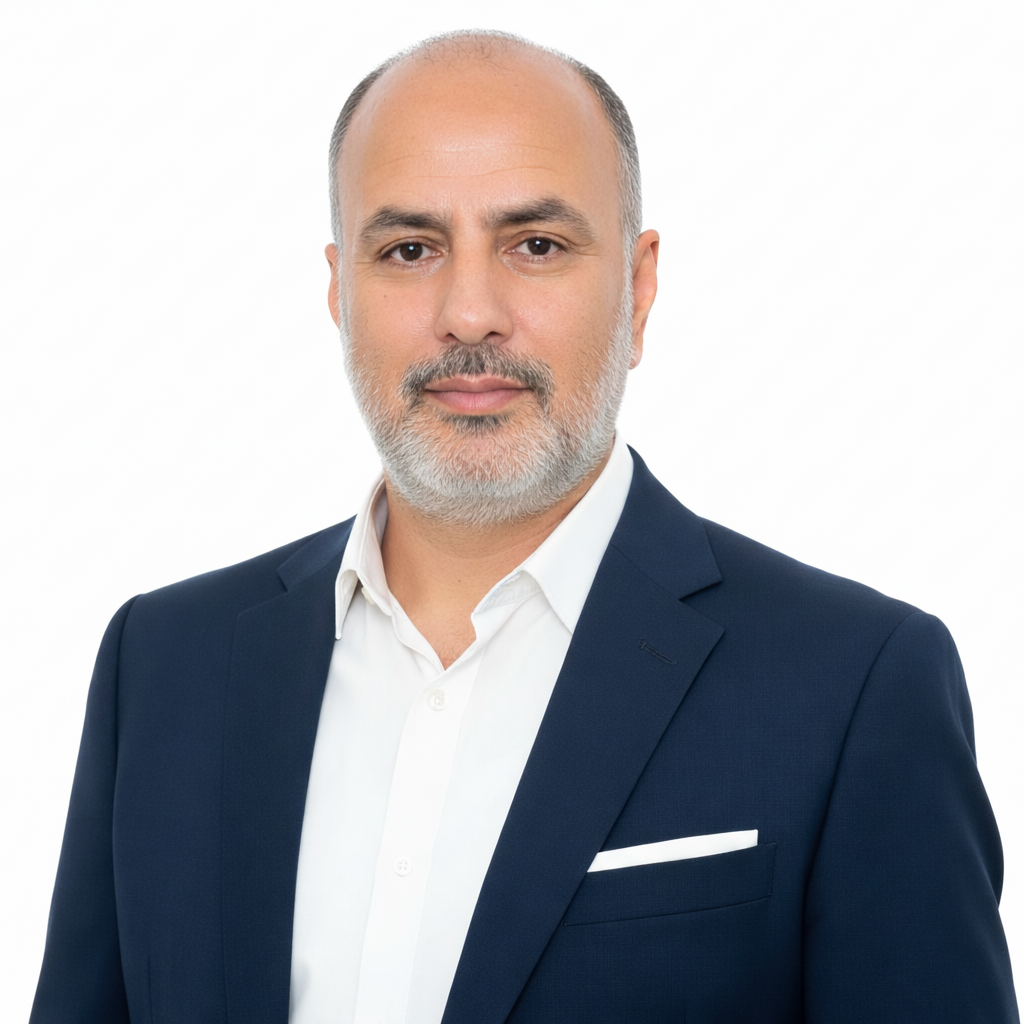
Rohit Tikoo is a published author, researcher, and content strategist with over two decades of writing experience. He is the author of nine books covering Kashmir, Indian philosophy, social issues, and contemporary thought, including Shadows Over the Valley: Operation TUPAC, Cold War Geopolitics, and the Kashmiri Pandits Exodus (2025).
His work focuses on Kashmir’s history, literature, culture, and the lived experiences of the Kashmiri Pandit community. Through extensive research, archival references, and historical analysis, he seeks to document and preserve narratives that are often overlooked in mainstream discourse. His writing on Kashmir has appeared in DAILY EXCELSIOR, HEADLINES TODAY, ONLY KASHMIR, GREATER KASHMIR, NAAD,
VITASTA, CHATTAN, AND VOICE OF SILENCE.
Through rohittikoo.com, he publishes research-based articles, essays, and commentary aimed at fostering informed discussion on Kashmir, Indian civilisation, literature, and contemporary society.