
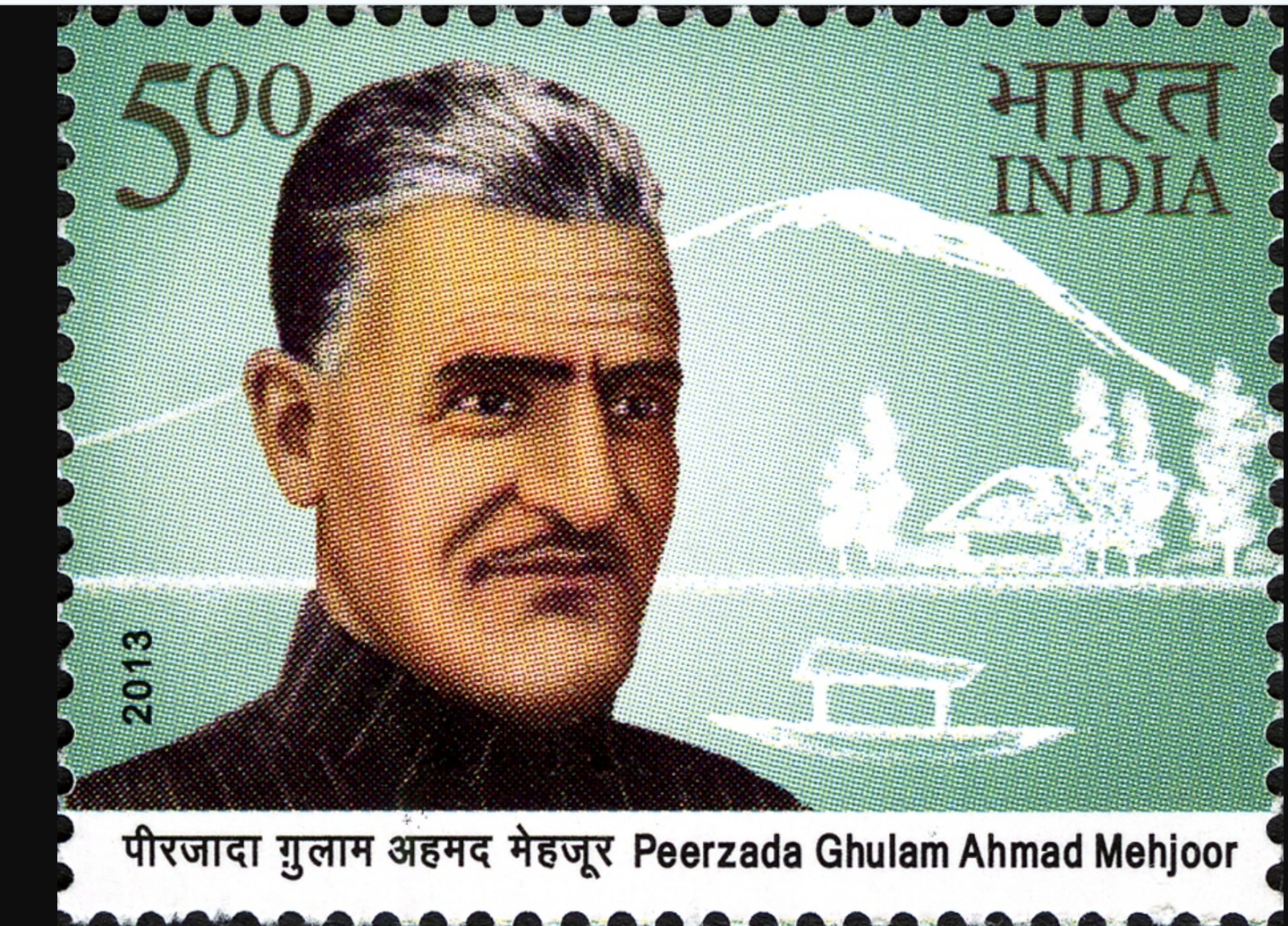
Few poets have shaped the cultural identity of a people as profoundly as Peerzada Ghulam Ahmad Mahjoor. Revered as Shair-e-Kashmir (Poet of Kashmir), Mehjoor transformed Kashmiri poetry by bringing it closer to the language, emotions, and aspirations of ordinary people.
Literary historians widely regard him as the father of modern Kashmiri poetry because he expanded the scope of Kashmiri literature beyond mysticism and devotional themes into social reform, communal harmony, love, nature, and political awakening.
More than seven decades after his death, his poems continue to be recited, sung, and studied across Kashmir. His influence extends beyond literature into the cultural and political history of the region.
Quick Facts About Mehjoor
| Fact | Details |
|---|---|
| Full Name | Peerzada Ghulam Ahmad Mahjoor |
| Pen Name | Mahjoor |
| Birth | Mitrigam, Pulwama, Kashmir |
| Death | 9 April 1952 |
| Profession | Patwari (Revenue Official) and Poet |
| Known As | Shair-e-Kashmir |
| Literary Status | Father of Modern Kashmiri Poetry |
| Languages | Kashmiri, Urdu, Persian |
Source: Mahjoor biographical records.
Early Life and Education
Mahjoor was born in Mitrigam village in Pulwama district. His father, Peerzada Abdullah Shah, was a scholar of Persian and Islamic learning and played an important role in his early education. According to multiple biographical accounts, Mahjoor studied Persian, Arabic, and traditional religious subjects before receiving formal education in Srinagar.
His father hoped that he would follow a religious career. However, Mahjoor developed a deep interest in literature at an early age. During his stay in Punjab, he came into contact with prominent Urdu literary circles and poets, including Maulana Shibli Nomani and Bismil Amritsari. These interactions helped shape his literary outlook and inspired him to adopt the pen name “Mahjoor”.
From Urdu and Persian to Kashmiri
Like many educated Kashmiris of his generation, Mahjoor initially wrote in Persian and Urdu. Over time, however, he became convinced that Kashmiri could serve as a powerful literary language capable of expressing contemporary realities and social concerns.
His shift to Kashmiri poetry proved transformative. Scholars note that he deliberately employed simple language and folk idioms rather than the heavily Persianised style that had dominated much of earlier literary writing. This made his poetry accessible to ordinary readers and listeners.
Why Mehjoor Is Called the Father of Modern Kashmiri Poetry
Before Mehjoor, much of Kashmiri poetry focused on mystical and devotional themes. While those traditions remained important, Mahjoor widened the literary horizon by writing about everyday life, social reform, communal harmony, freedom, youth, nature, and the struggles of ordinary Kashmiris.
His poetry introduced new subjects into mainstream Kashmiri literature. He wrote about peasants, gardeners, flowers, village life, and the beauty of Kashmir’s landscape while simultaneously encouraging social awakening and reform. Literary commentators credit him with giving Kashmiri poetry a distinctly modern character.
Themes in Mehjoor’s Poetry
Love and Nature
The natural beauty of Kashmir occupies a central place in Mahjoor’s poetry. His verses celebrate gardens, flowers, rivers, mountains, and meadows. According to literary analyses, nature in his poetry is rarely decorative. Instead, it often becomes a vehicle for emotional expression and social commentary.
Social Reform
Mahjoor consistently addressed social problems and encouraged progress. His poetry promoted dignity, education, and unity while criticising injustice and backwardness. Scholars identify social reform as one of the defining characteristics of his work.
If Mahjoor were alive today, he would have felt the pain of the Kashmiri Pandits’ exodus; he would have witnessed the devastating displacement of an entire community that had lived in Kashmir for centuries. His poetry, which always championed communal harmony and gave voice to the oppressed masses, would have undoubtedly expressed the anguish of those forced to flee their ancestral valleys.
Communal Harmony
Several accounts emphasise Mahjoor’s commitment to communal harmony and social cohesion. His poetry sought to unite people across social and religious divisions.
Career as a Patwari
Alongside his literary pursuits, Mahjoor worked as a patwari in the revenue department. His postings across Kashmir exposed him to the lives and hardships of ordinary people. Historians believe these experiences enriched his understanding of rural society and deeply influenced his poetry.
Literary Legacy
Mahjoor’s influence on Kashmiri literature remains immense. His work helped establish Kashmiri as a modern literary language capable of addressing contemporary concerns. Later writers and critics frequently describe him as one of the architects of the Kashmiri literary renaissance of the twentieth century.
His importance is reflected in the continued scholarly attention devoted to his work. In 1998, literary scholar Mohammad Yousuf Taing received the Sahitya Akademi Award for Mahjoor Shinasi, a critical study dedicated entirely to Mahjoor’s life and literary contributions.
Honours and Recognition
Mahjoor’s legacy continues to be commemorated in multiple ways.
- Mahjoor Day is observed annually in Kashmir.
- A bilingual biographical film, Shayar-e-Kashmir Mahjoor, was released in 1972.
- India Post issued a commemorative postage stamp in his honour on 25 June 2013.
- Areas and public landmarks in Srinagar bear his name.
Chronology
1887: Born in Mitrigam, Pulwama.
1905-1908: Travels to Punjab and develops connections with Urdu literary circles.
1914-1918: Begins writing extensively in Kashmiri and publishes early Kashmiri poetry.
1952: Dies on 9 April.
1972: Release of Shayar-e-Kashmir Mahjoor.
2013: India Post issues commemorative stamp.
Frequently Asked Questions
Who was Mehjoor?
Mehjoor, whose full name was Peerzada Ghulam Ahmad Mahjoor, was a Kashmiri poet widely regarded as the father of modern Kashmiri poetry.
Why is Mehjoor called the Father of Modern Kashmiri Poetry?
He expanded Kashmiri poetry beyond traditional mystical themes and introduced subjects such as social reform, communal harmony, rural life, and political awareness.
What was Mehjoor’s profession?
He worked as a patwari in the revenue department while simultaneously pursuing his literary career.
Did India honour Mehjoor?
Yes. India Post issued a commemorative postage stamp in his honour in 2013.
References
Braj B. Kachru, Kashmiri Literature.
Triloki Nath Raina, A History of Kashmiri Literature.
Mohammad Yousuf Taing, Mahjoor Shinasi.
Greater Kashmir, “Remembering Mahjoor” (2023).
JETIR, “Mehjoor’s Poetic Odyssey in Shaping Kashmiri Identity and Consciousness” (2023).
India Post commemorative stamp records (2013).

Rohit Tikoo is a published author, researcher, and content strategist with over two decades of writing experience. He is the author of nine books covering Kashmir, Indian philosophy, social issues, and contemporary thought, including Shadows Over the Valley: Operation TUPAC, Cold War Geopolitics, and the Kashmiri Pandits Exodus (2025).
His work focuses on Kashmir’s history, literature, culture, and the lived experiences of the Kashmiri Pandit community. Through extensive research, archival references, and historical analysis, he seeks to document and preserve narratives that are often overlooked in mainstream discourse. His writing on Kashmir has appeared in DAILY EXCELSIOR, HEADLINES TODAY, ONLY KASHMIR, GREATER KASHMIR, NAAD,
VITASTA, CHATTAN, AND VOICE OF SILENCE.
Through rohittikoo.com, he publishes research-based articles, essays, and commentary aimed at fostering informed discussion on Kashmir, Indian civilisation, literature, and contemporary society.